FRIESS S100 Oil Skimmer for Parking Lot Wastewater
Hydrocarbon (HC) concentrations in parking lot wastewater are typically 50 to 100 times higher than in street runoff. A parking lot wastewater oil skimmer is therefore an important part of treatment. The contamination is caused by oil dripping from parked vehicles and the degradation of asphalt surfaces.
In laboratory conditions, coalescing separators can achieve HC concentrations of 5 mg/L. Under real operating conditions, however, fine particles rapidly clog the coalescing media, preventing this level of performance. Direct wastewater discharge actually requires a concentration below 0.1 mg HC/L.
A New Two-Stage Process
To achieve the target HC concentration of 0.1 mg/L, a two-stage treatment process was introduced. In the first stage, 95% of the fine particles are removed to ensure reliable operation. This is achieved in a batch process with four timed phases: filling, mixing, settling and emptying.
Mixing phase: dissolved hydrocarbons bind to fine particles.
Settling phase: oil-saturated particles settle while free oil rises to the surface.
Oil removal: the oil skimmer removes floating oil during approximately 90% of the year; settled solids are removed every five years.
Second-stage filtration: a bottom filter removes the remaining HC contaminants.
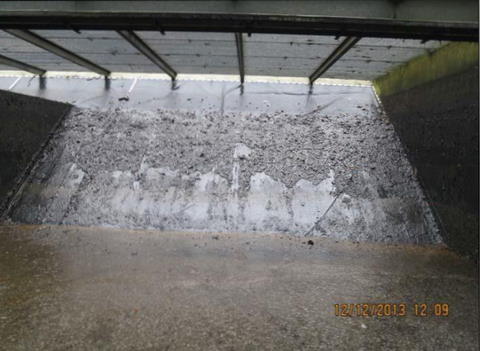
Stage-One Sludge Discharge
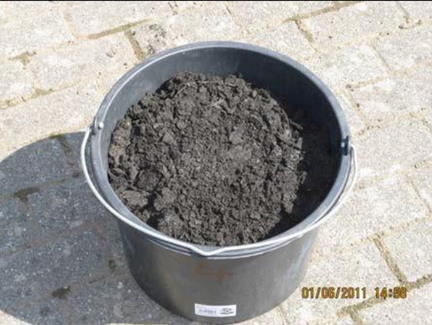
The time distribution between the filling and drying phases determines the dry-matter content of the sludge. Depending on the operating cycle, values of 30%, 40% and up to 55% can be achieved.
Before Treatment
After Treatment
Sludge with 30% Dry Matter
Sludge with 40% Dry Matter
Sludge with 55% Dry Matter
Stage-Two HC Binding Capacity
Although the HC concentration in the feed to the second stage falls from approximately 40 mg HC/L to 1.5 mg HC/L, sufficient binding capacity is still required for the remaining hydrocarbon load. Chromatographic effects during batch operation and HC uptake by vegetation demonstrate why binding capacity in the soil filter remains essential.
Chromatographic Effect Caused by Treatment
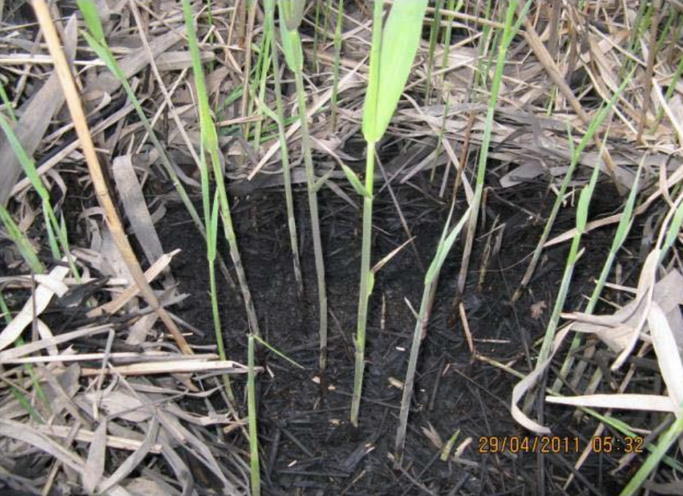
HC Accumulation in Vegetation
Oil Skimmer Operation in the First Treatment Stage
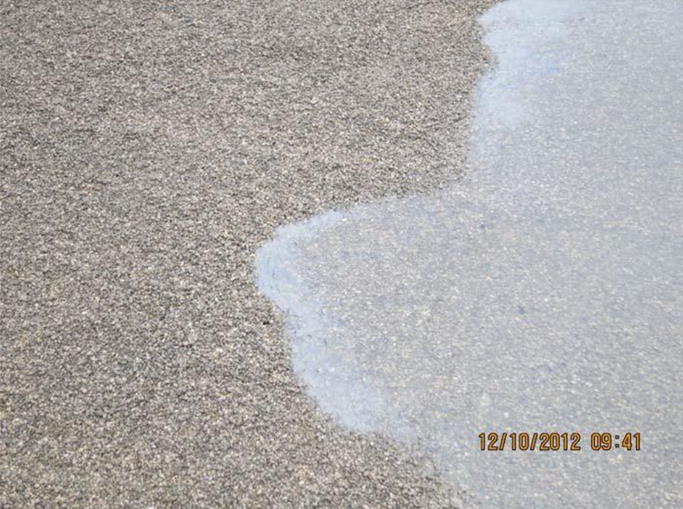
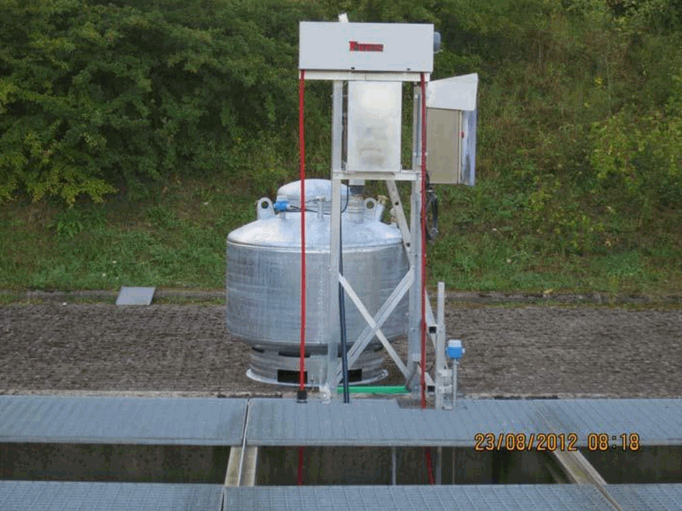
Mineral oils that are not bound to particles and have a density below 1 are removed from the water surface by a tube oil skimmer and transferred to a waste-oil tank. The absence of an oil layer in the pump chamber clearly demonstrates the skimmer’s effectiveness.
Previous operating experience showed that the skimmer removed 500 litres of water-free oil from the basin, equivalent to an HC load of 35 mg per litre of wastewater.
FRIESS S100 Oil Skimmer
Without Oil Skimmer (left) and With Oil Skimmer (right)
Recovered Oil Conditioning
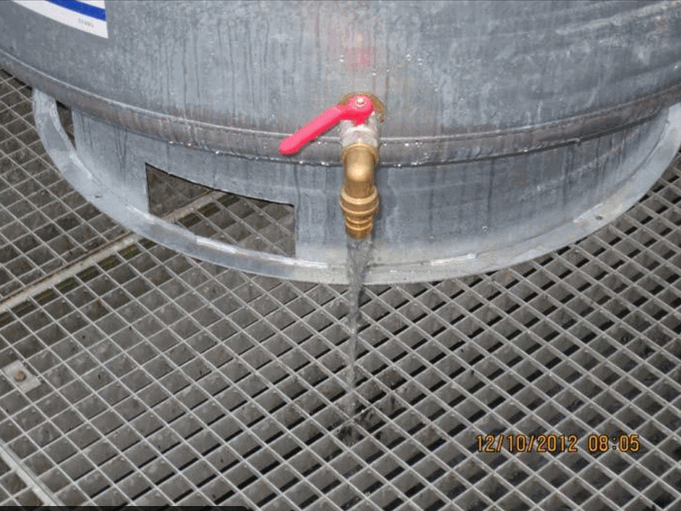
The liquid removed by the oil skimmer initially contains more than 90% water. Two separation stages are used to obtain an oil phase with low water content. In the skimmer collection vessel, the first separation stage returns water collected at the bottom to the rainwater retention basin (RRB). In the waste-oil tank, the second separation stage uses a drain valve at the bottom to remove separated water once a month.
Because of their high mineral-oil content, the waste oil and sludge from the first treatment stage are suitable for thermal recovery. Sludge from the second-stage filter can remain in the filter for the long term because of its low accumulation rate of 0.85 kg DM/m²·a and high mineralization rate of more than 80%.
Future Reed Planting
Although particulate contamination on the filter surface is relatively low, reeds are still required to counter the severe clogging caused by oil-saturated particles.
Filter Surface Without Oil Skimmer
Filter Surface with Oil Skimmer
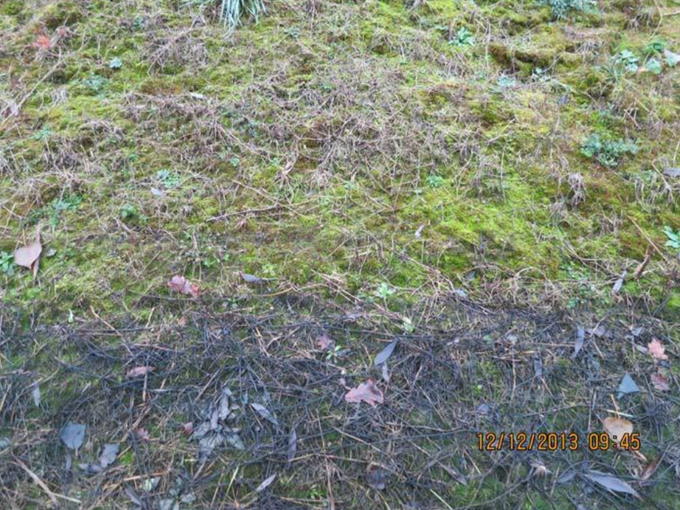
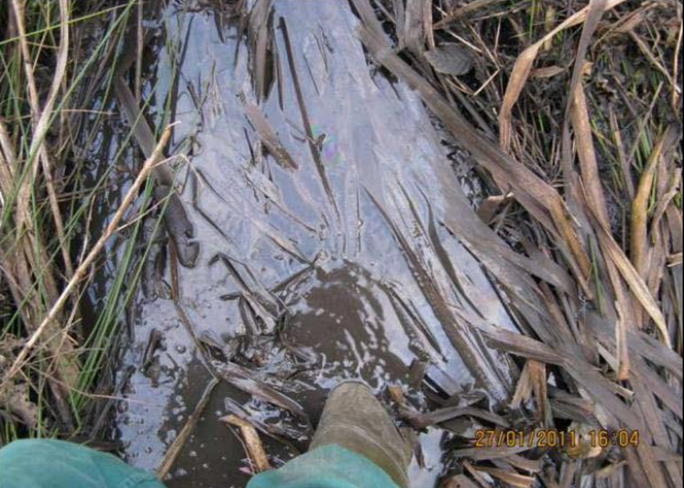
Rapid Regeneration of the Drainage System
The treated parking lot wastewater flows into a gently sloping drainage channel. Despite the high HC load, the visual condition of the channel improved significantly after six months of operation with the new process.