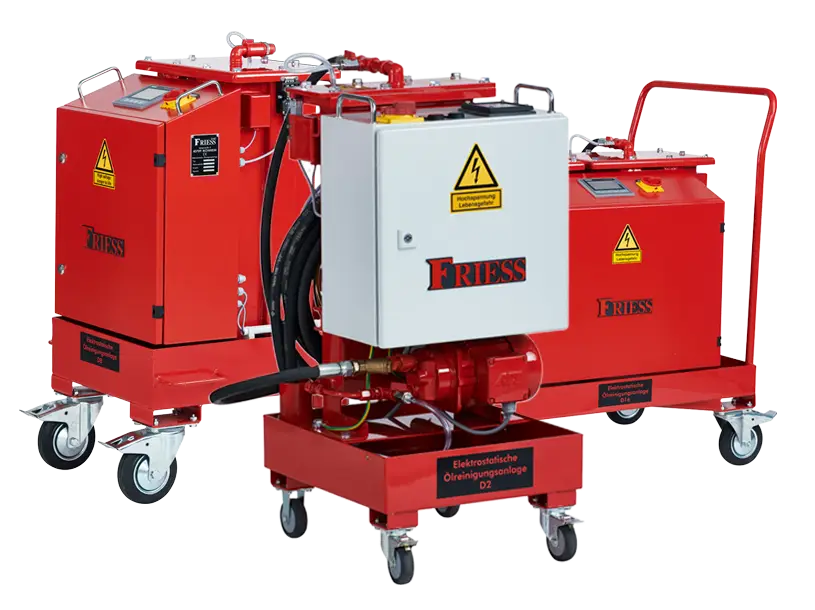
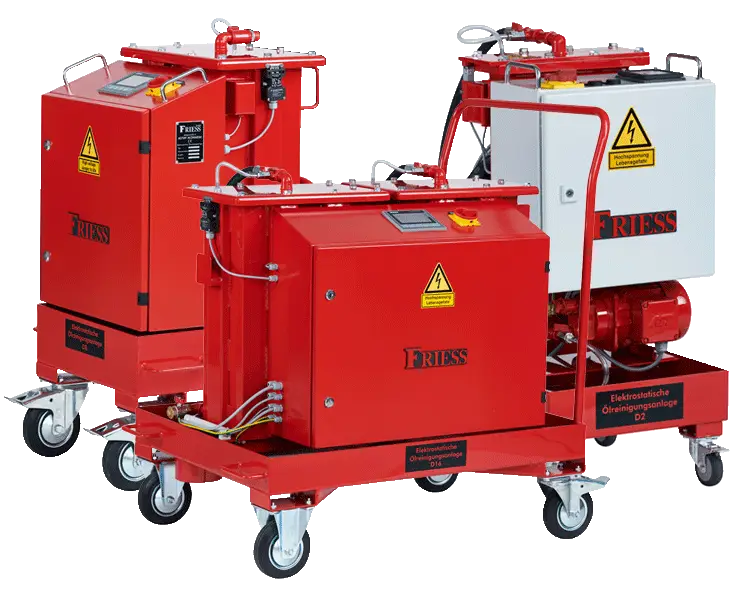
Deep-clean hydraulic oil. Extend oil service life.
Continuously removes fine particles, sludge, resin and oxidation products from non-conductive hydraulic and lubricating oils, helping reduce equipment failures and extend oil service life.
Continuous cleaning. Less maintenance.
01
Remove fine particles down to 0.01 μm
02
Remove sludge, resin and oxidation products
03
Extend oil service life and reduce hydraulic-system failures
Conventional filters primarily retain particles according to the pore size of the filter medium, while the FRIESS EFR electrostatic oil cleaner uses a high-voltage electrostatic field to capture contaminants in the oil.
This purification method removes fine particles down to 0.01 μm and also captures soft contaminants such as sludge, resin and oxidation products, helping hydraulic oil remain clean over the long term.
Designed for industrial oils with water content below 500 ppm, the DSD uses electrostatic deep cleaning to remove fine particles, sludge and oxidation products, helping extend oil and equipment life.
A FRIESS EFR D8 electrostatic oil cleaner extended hydraulic-oil life from about two months to several years and reduced steel mill hydraulic failures by 70%.
A European gearbox plant used a FRIESS EFR D8 electrostatic oil cleaner to reduce hydraulic-oil particles larger than 4 µm by about 90% in a 23-hour test.
A FRIESS EFR D16 with automatic particle monitoring reduced hydraulic faults on four automotive presses by more than 80%, with payback in under six months.
A FRIESS EFR D8 electrostatic oil cleaner reduced hydraulic failures from two per year to zero, cut machine-filter consumption by 75% and eliminated oil changes.
A FRIESS EFR D16 removed oxidation products and varnish from two 12,000-litre aluminum extrusion press hydraulic systems and restored fault-free servo-valve operation.
Hydraulic Oil Purification for Hydropower Stations
Reliable Control and Actuation of Hydraulic Systems
Governors, gate actuators and auxiliary hydraulic systems in hydropower stations operate continuously for long periods. Fine particles, sludge and oxidation products in the oil impair valve response and accelerate wear on pumps and seals.
FRIESS electrostatic oil cleaners are available in different sizes to match tank volume and contamination load. Continuous offline purification does not interrupt normal equipment operation.
Typical applications: Governor systems, gate actuators, lubrication systems and large hydraulic power units
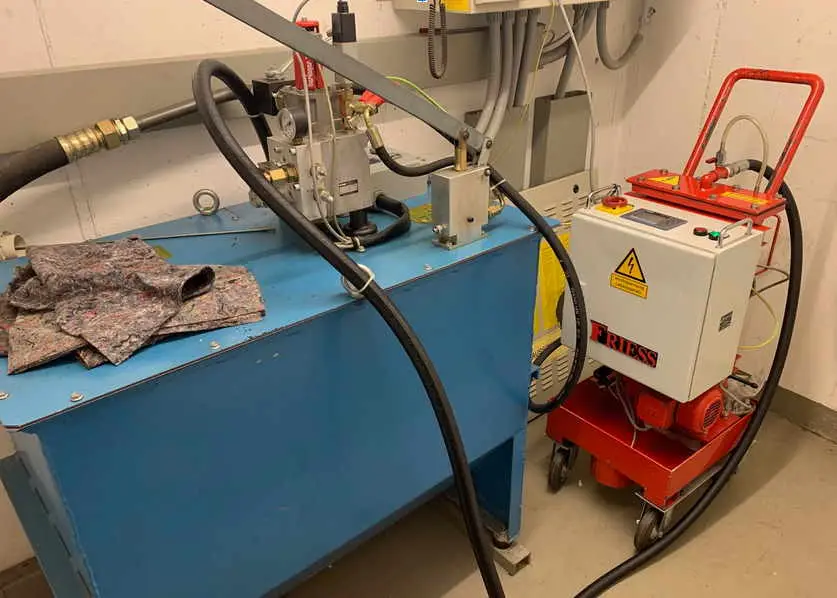
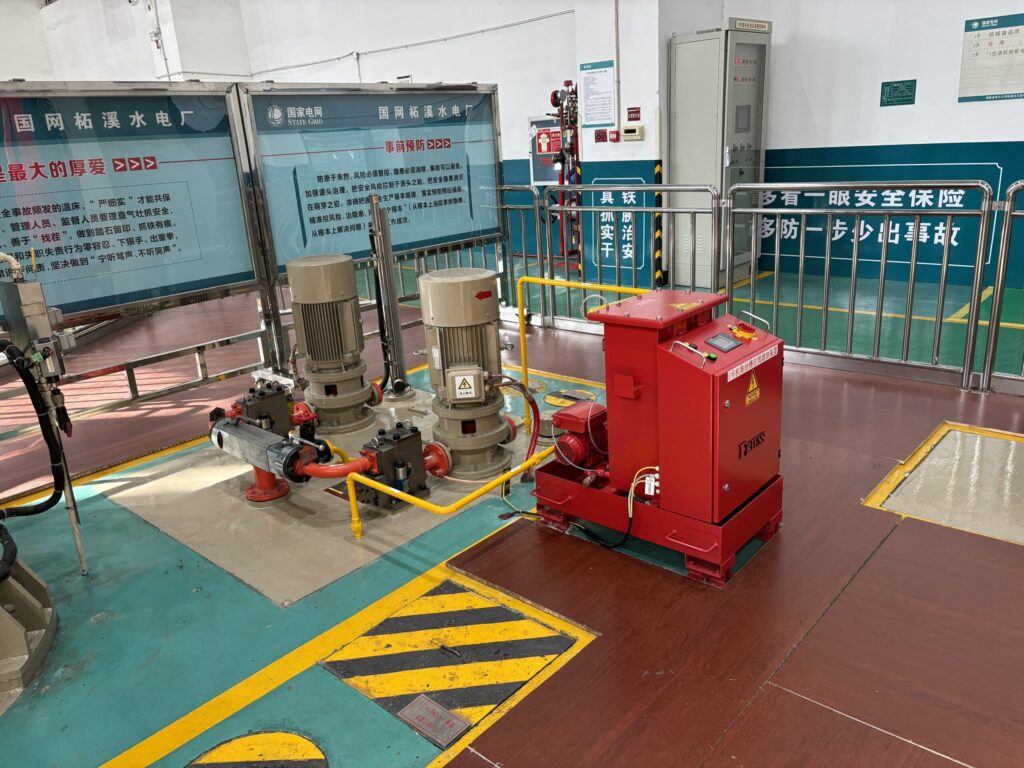
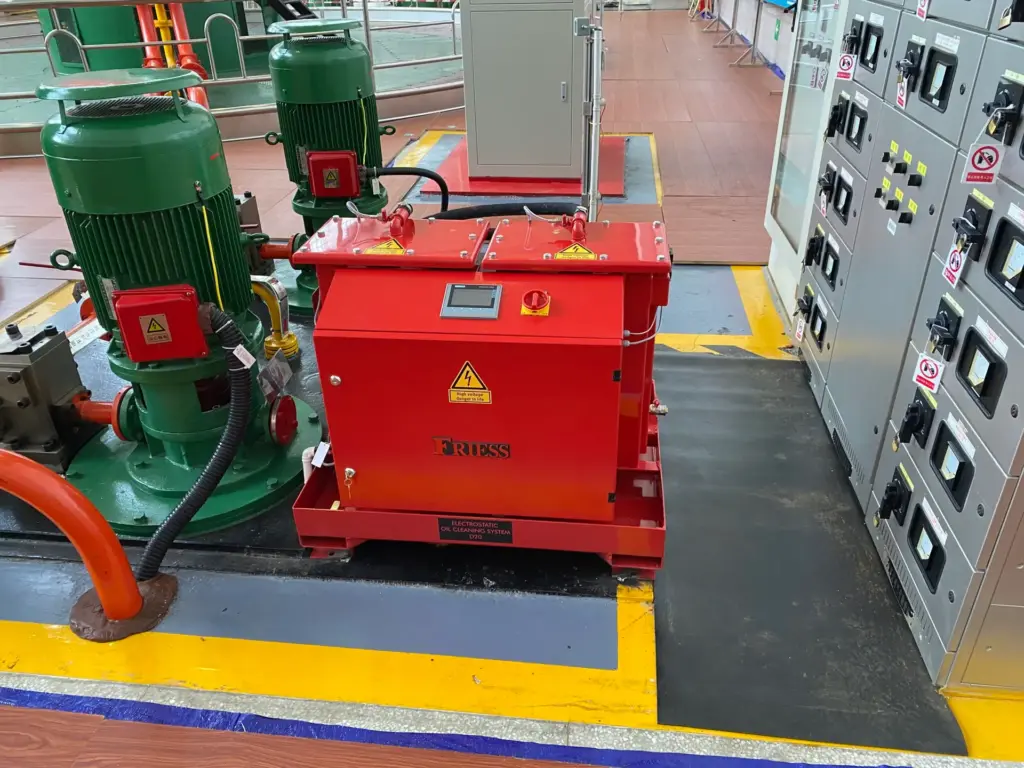
FRIESS Electrostatic Oil Purifier at Hydropower Plant – Site 2
FRIESS Electrostatic Oil Purifier at Hydropower Plant – Site 1
Hydraulic Oil Purification for Injection-Moulding Machines
Reduce Valve Sticking and Unplanned Hydraulic-System Downtime
Injection-moulding machines operate at high temperatures with continuous circulation and frequent directional changes. Hydraulic oil can develop oxidation products, sludge and extremely fine wear particles that impair the stability of proportional valves, servo valves and hydraulic pumps.
FRIESS electrostatic oil cleaners capture fine particles and soft contaminants that conventional filter elements often cannot retain, helping to extend the service life of both the oil and precision hydraulic components.
Typical applications: Injection-moulding machines, die-casting machines and other high-precision industrial hydraulic equipment
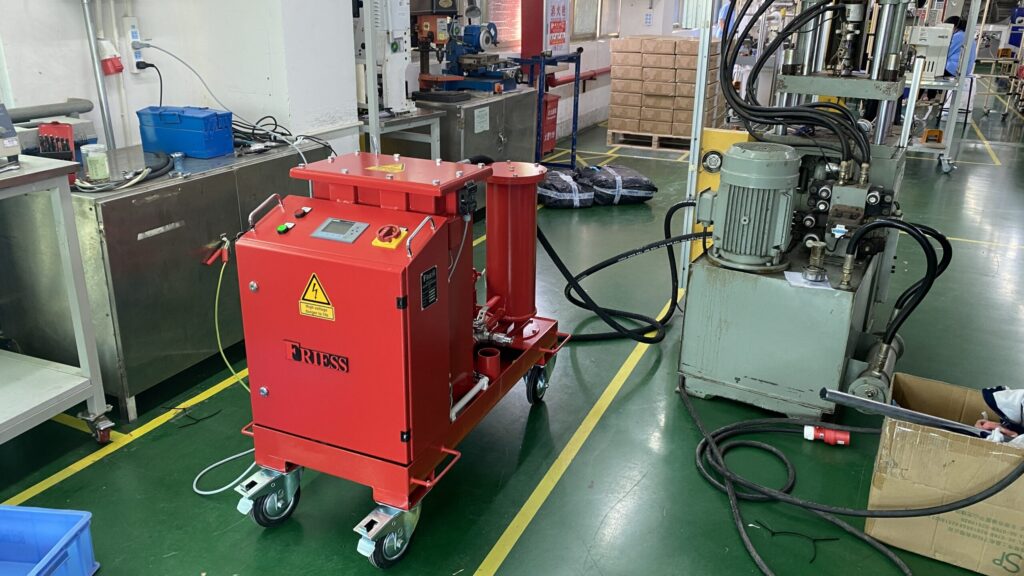
FRIESS Electrostatic Oil Purifier for Injection Molding Machines
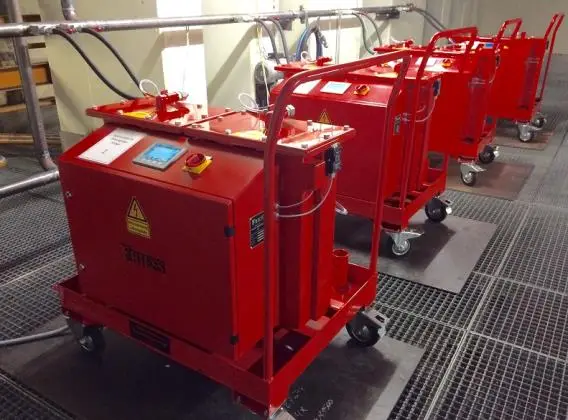
FRIESS Electrostatic Oil Purifier for Hydraulic Oil Filtration
How FRIESS EFR Electrostatic Oil Cleaners Deep-Clean Hydraulic Oil
SECTION 01 | How Contamination Damages Hydraulic Systems
How Clean Hydraulic Oil Protects Reliable Equipment Operation
Fine particles in hydraulic systems cause wear and erosion and also accelerate oil oxidation. Continuously removing particles, sludge, varnish and deposits helps reduce failures and extend the service life of the oil and precision components.
1–4 µm
Typical lubricating-film thickness
10–20 years
Long-term oil-service example
Approx. 70%
Potential reduction in failures
01 · WEAR
Wear
Particles entering lubrication clearances break down the oil film, damage pumps, valves and moving surfaces, and generate additional wear particles.
02 · EROSION
Erosion
High-speed oil flow carries particles into valve edges and nozzles, gradually cutting grooves that reduce control accuracy and increase internal leakage.
03 · OXIDATION
Oxidation
Contaminant particles catalyse oil oxidation and promote varnish, deposits and sludge, causing valves to stick and respond slowly.
SECTION 02 | Cleanliness and Oil Requirements
Oil Cleanliness Must Meet System Requirements
Where Does the Cleanliness Target Come From?
Hydraulic-component manufacturers specify the oil-cleanliness level required for safe operation. Precision components such as proportional and servo valves are particularly sensitive to particle contamination.
Requirements vary by component, so the recommended cleanliness class is both a system-acceptance criterion and an important basis for selecting purification equipment.
Basic Selection Principle
Use the requirement of the most contamination-sensitive component as the purification target.
The more precise the component, the stricter its oil-cleanliness requirement usually is.
Oil Quality and Equipment-Warranty Requirements
Meeting the specified oil cleanliness is essential for technical reliability and may also affect the equipment warranty. Some manufacturers may reject warranty claims if the hydraulic oil does not meet their cleanliness requirements.
Select oil-purification equipment capable of continuously maintaining the target cleanliness class and verify performance through regular oil analysis.
More information: hydraulic-oil analysis and cleanliness-class assessment.
Hydraulic Oil Purification Basics
Maintenance Checklist
11 Ways to Reduce Failures and Operating Costs
For routine inspection and preventive maintenance
01
Follow the maintenance intervals and requirements specified by the manufacturer
02
Have trained personnel perform and document maintenance
03
Check oil condition regularly through oil analysis
04
Replace hydraulic oil only when its chemical condition is out of specification
05
Prevent water ingress and dewater the oil when necessary
06
Keep seals and hoses intact and replace damaged parts promptly
07
Keep the working environment clean to reduce contaminant ingress
08
Do not allow the oil level to fall below the specified minimum
09
Store hydraulic oil in clean, sealed and suitable containers
10
Use clean equipment and filter new oil during filling and top-up
11
Inspect the filtration system and oil cleanliness regularly
Filtration methods can be classified by installation position or by filter medium and operating principle. Each performs a different task, and industrial hydraulic systems normally use a combination.
01 · PUMP INLET
Suction Filters
Prevents larger particles from entering the hydraulic pump; resistance must remain low to avoid insufficient suction or cavitation.
02 · PRESSURE LINE
Pressure Filters
Filters the oil before it reaches sensitive components; the housing and element must withstand system pressure.
03 · RETURN LINE
Return-Line Filters
Filters return oil before it enters the tank, preventing operating contaminants from being carried back into the reservoir.
04 · DEPTH MEDIA
Depth Filters
Uses a thick, porous medium to capture particles; soft contaminants can rapidly cause blockage.
05 · SURFACE SCREEN
Screen Filters
Retains solid contaminants with a fine screen; filtration accuracy is mainly determined by mesh size.
06 · OFFLINE CIRCUIT
Offline and Bypass Purification
Purifies continuously at a stable low flow, independent of main-system flow fluctuations, and can be serviced without stopping production.
Capturing Contaminants with an Electrostatic Field Instead of Fine Pores
A high-voltage electrostatic field is created between two electrodes. It acts on charged contaminant particles in the oil, deflecting them toward the collector media. Because EFR uses a different operating principle, it can remove ultrafine particles that conventional filter media struggle to retain.
01
Generate the Electrostatic Field
High-voltage electrodes create a stable field inside the purification chamber.
02
Deflect the Particles
Charged particles of different sizes are acted upon by the field.
03
Capture in Collector Media
Particles and soft deposits are collected continuously.
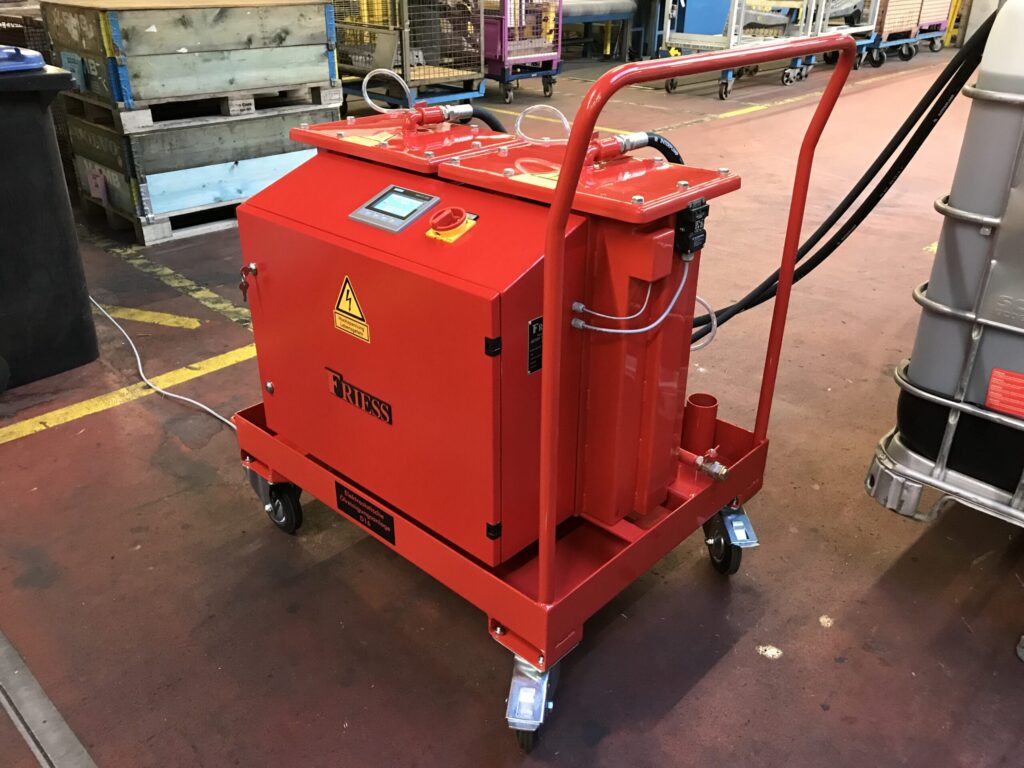
FRIESS EFR Hydraulic Oil Filter in Operation
Limitations of Conventional Filter Media
Pore Size Determines Retention Capability
Ultrafine particles can pass through conventional media, while soft contaminants such as sludge, resin and varnish can rapidly block the filter element.
How EFR Is Different
Regenerative Oil Purification
EFR continuously removes oxidation-promoting ultrafine particles and existing soft deposits, slowing oil ageing and helping restore oil performance.
Four Core Advantages of FRIESS EFR
01
Capture Ultrafine Particles
Removes particles finer than conventional depth filters can reliably retain.
02
Remove Soft Contaminants
Continuously removes sludge, resin, varnish and other oxidation deposits.
03
Continuous Offline Operation
Easy to connect, monitor and maintain without interrupting the main hydraulic system.
04
Low Consumable Use and Long Service Intervals
High-capacity collector media reduce consumable use and extend maintenance intervals.
SECTION 05 | Maintenance, Sustainability and Economy
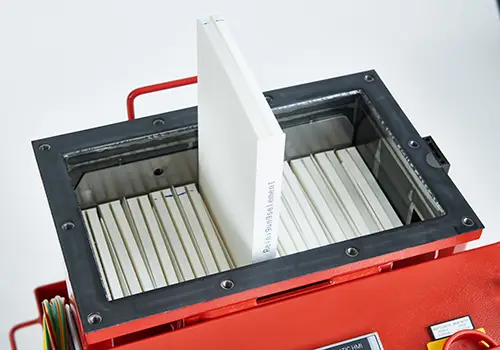
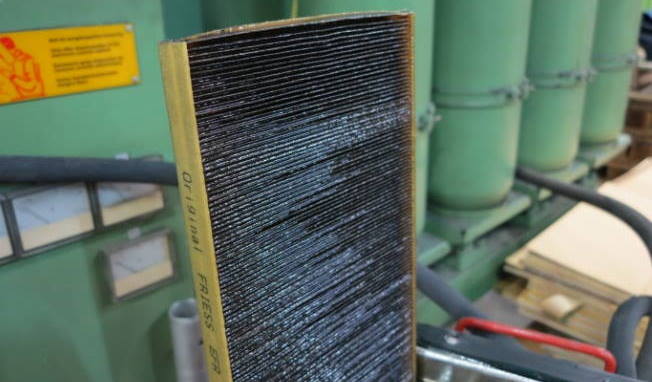
The large electrostatic purification chamber provides high contaminant capacity and opens easily. Maintenance personnel can replace the collector media quickly and directly assess captured contamination by comparing the media before and after use.
Before Use
Clean, Large-Area Collector Media
Unused collector media provide a large effective collection area for continuously capturing fine particles and soft contaminants in the electrostatic field.
After Use
Contaminants Are Captured Visibly
Tar-like deposits, oxidation products and ultrafine particles accumulate on the originally white media, demonstrating EFR’s ability to capture resinous and fine contaminants that conventional filters cannot readily remove.
Maintenance Without Shutdown
The main system can continue operating while media are replaced in the offline circuit.
Approx. 2,000-Hour Inspection Interval
The actual inspection interval depends on the site contamination load.
Clear Maintenance Indication
The display shows operating time and maintenance reminders.
How Does Oil Purification Save Oil and Protect Resources?
↓
Extend Oil Life While Reducing Resource Consumption
Hydraulic oil consumes energy and generates carbon emissions throughout raw-material extraction, production, transport and waste-oil disposal. Reducing oil changes lowers purchasing, transport and disposal burdens at the same time.
SECTION 06 | Selection Guide and Frequently Asked Questions
More Than 50 Years of FRIESS Industrial Oil-Purification Experience
50+
Years of Oil-Purification Experience
FRIESS products are made in Germany and have operated reliably in numerous industrial applications for many years. We combine oil type, system volume and contamination load to provide durable, dependable and easy-to-maintain purification solutions.
When selecting hydraulic-oil purification equipment, assess purification performance, system compatibility and life-cycle cost—not only the initial purchase price.
01
Filtration Method
Review the existing suction, pressure and return-line filtration and determine whether offline deep purification is required.
02
Oil Volume and Treatment Capacity
Select the equipment size according to tank volume, system flow and contamination load.
03
Target Cleanliness
Use the cleanliness requirement of the most sensitive component as the purification target.
04
Contaminant Type
Consider both hard particles and soft contaminants such as sludge, resin and varnish.
05
Installation and Maintenance
Evaluate offline connections, installation space, consumables, maintenance intervals and whether shutdown is permitted.
Why Is Maintenance Simpler?
Clear, fast maintenance procedures help reduce labour and downtime costs. The FRIESS EFR display indicates operating time and maintenance intervals for timely contamination checks. Collector media and electrodes are readily accessible, and the hydraulic system can remain in operation during servicing. High contaminant capacity allows a typical inspection interval of about 2,000 operating hours; the actual interval depends on the contamination load.
How Do You Select the Right Filtration Combination?
The optimum filtration solution depends on the specific system. Most hydraulic systems combine several filtration methods to achieve the target cleanliness. Follow the oil and equipment manufacturers’ requirements when selecting equipment and setting maintenance intervals.
Conventional filters can control hard particles above a certain size but often cannot remove the ultrafine particles that accelerate oil ageing or soft contaminants such as varnish and resin. This is the principal application advantage of FRIESS EFR electrostatic oil purification.
Frequently Asked Questions: Selection, Operation and Cost
01
How Does Electrostatic Hydraulic-Oil Filtration Reduce Oil Consumption?
By slowing oil ageing and maintaining a consistently low contamination level, oil-change frequency can be reduced significantly. This lowers hydraulic-oil purchasing and waste-oil disposal volumes while extending the service life of the existing oil.
02
How Does Clean Oil Reduce Maintenance Costs?
Keeping the oil continuously clean reduces component wear and failures, lowering spare-parts replacement, top-up oil and maintenance labour costs. Continuous EFR purification combined with proper maintenance reduces total system operating cost.
03
What Is the Cost Impact of Continuous EFR Purification?
As long as the oil remains chemically within specification, continuous contaminant removal postpones complete oil changes and new-oil purchases while reducing damage to valves, pumps and other components and the risk of unplanned downtime.
04
What Is Varnish in Hydraulic Oil?
Varnish and resinous deposits are typical products of oil oxidation and ageing. Particles catalyse oxidation; above 60 °C, every increase of about 10 °C roughly doubles the oxidation rate. EFR continuously captures ultrafine particles and soft oxidation deposits.
05
How Is EFR Different from Conventional Filter Elements?
EFR is not directly limited by conventional filter-media pore size. It removes difficult-to-retain ultrafine particles and captures soft contaminants such as sludge, resin and varnish. Continuous offline operation gradually achieves a high level of system cleanliness.
06
What Is the Typical Payback Period for FRIESS EFR?
Payback mainly depends on system oil volume, the previous oil-change interval, component-failure frequency and the costs of oil purchasing, disposal and downtime. In large systems, avoiding one complete oil change can shorten payback significantly. Many projects achieve payback in about one year; the actual period should be evaluated using site data.
07
Replace the Oil or Continue Using It After Purification?
When viscosity, acid number, additive condition and other chemical parameters remain within specification, continued use after purification is usually more economical and reduces resource consumption and waste-oil disposal.
Replace the oil when: The oil has undergone irreversible chemical degradation or contamination is too severe for economical recovery.
08
How Long Does It Take to Reach the Target Cleanliness?
The time depends on system oil volume, initial contamination, contaminant type and existing filtration. Dirtier systems require a longer initial purification period; after the target is reached, the load required to maintain cleanliness drops substantially. A site-specific estimate can be based on oil analysis, tank volume and operating conditions.