
Cleaner test oil in two weeks.
Fewer residue defects.
A filter manufacturer used an EFR D4 to clean hydraulic oil on a test bench. After two weeks, oxidation products and coarse particles were substantially reduced. The plant subsequently equipped all three test benches with individual D4 systems, reducing product defects caused by residual contamination.
Case background
A filter manufacturer produces pressure vessels with capacities ranging from 50 to 500 litres. Cast blanks are machined and then washed to remove contamination from inside the filter housings.
After washing, the components are leak-tested with HLP 46 hydraulic oil. The plant operates three test benches, each filled with 2,000 litres of oil. Because every tested component carries out a small quantity of oil, the test oil is not replaced; fresh oil is added regularly only to make up for these process losses.
The Hydraulic-Oil Contamination Problem
Oil analysis showed that the test fluid remained heavily contaminated despite the existing filtration system. During residual-contamination analysis, quality assurance traced the contaminants found inside the pressure vessels back to the polluted hydraulic oil.
To reduce residual contamination after pressure testing—and thereby reduce warranty incidents at customer sites—the cleanliness of the test oil had to be improved.
Solution: FRIESS EFR D4 Electrostatic Oil Cleaner

Results: Clear Improvement after Two Weeks
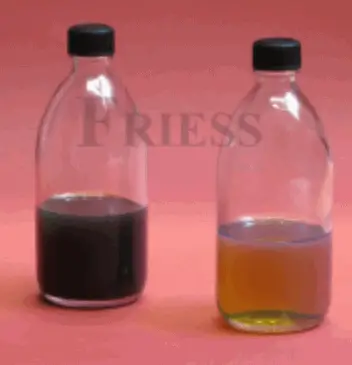
The first follow-up after only two weeks showed a substantial improvement in oil condition: oxidation products had fallen sharply, and the number of coarse particles was markedly lower.
Before-and-After Oil Sample Comparison
Before Electrostatic Oil Cleaning

Test membrane after filtering only 10 ml of oil
After Electrostatic Oil Cleaning

Test membrane after filtering 30 ml of oil
- Even a direct visual comparison of the two samples shows the marked improvement in oil condition.
Results with the FRIESS EFR D4
The cleaning result was so convincing that the maintenance department equipped all three test benches with an EFR D4 electrostatic oil-cleaning system. Quality assurance subsequently recorded far fewer defects caused by residual contamination.
Fine particles and oxidation products repeatedly building up in your test-bench hydraulic oil?
Please share your oil type, reservoir volume, system flow rate, current contamination class, particle and oxidation-product conditions, filter configuration and target cleanliness. Our China engineering team can recommend an EFR D4 electrostatic oil cleaner configuration, bypass installation and operating schedule for your conditions.