
70% Fewer Hydraulic Failures, Years of Oil Service Life
Dust severely contaminated the hydraulic oil in a steel mill’s straightening and pre-grinding systems. After 300 hours of EFR D8 cleaning, the oil became clear again, and laboratory analysis confirmed it was suitable for continued use. With ongoing cleaning, oil service life increased from about two months to several years, while hydraulic-system failures fell by 70%.
Case Background
Two large hydraulic systems operated in the same hall. At the first station, a Rexroth hydraulic power unit drove the cylinder used to straighten steel billets of approximately 100 × 100 mm. At the second station, the billets were pre-ground to remove mill scale.
Dust Continuously Contaminates the Hydraulic Oil
Grinding generated heavy airborne dust throughout the surrounding hall despite extraction. Under these harsh conditions, the hydraulic oil in both systems became severely contaminated. Even with good seals and regularly maintained breather filters, the oil was heavily polluted after only two months.
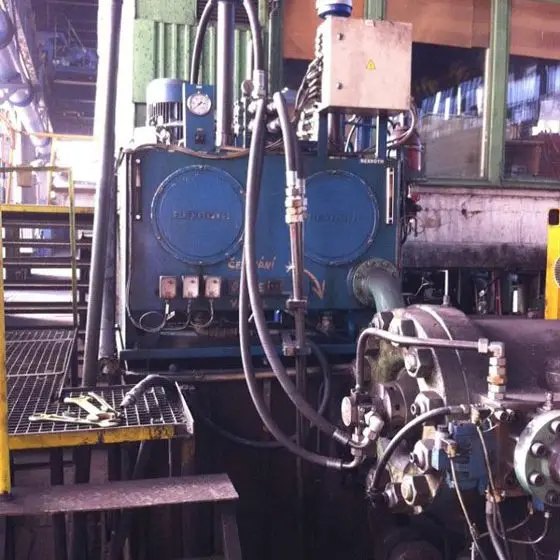
Whenever the straightening cylinder extended, the oil level in the reservoir fell and contaminated ambient air was drawn into the tank. Airborne particles entered the hydraulic oil, forcing oil changes after only a few months. Valves and pumps also failed frequently.
The maintenance department tried several long-term improvements, beginning with an upgrade to the extraction system to reduce airborne dust in the hall.
Better breather filters were installed on the hydraulic tanks, and the cylinder seals were replaced regularly, but neither measure solved the problem. After reviewing filtration and oil-cleanliness options—and receiving positive feedback from other operators—the maintenance team decided to test a FRIESS EFR D8 electrostatic oil-cleaning system.
Initial Results After 300 Operating Hours

Before the EFR oil cleaner was started, an oil sample was taken from the system. A second sample was taken after 300 operating hours.
- Direct comparison showed a substantial improvement in cleanliness.
- The originally dull, almost opaque oil became clear and bright again.
- Laboratory oil analysis confirmed that the purified oil remained suitable for continued use.
Long-Term Benefits: Years of Oil Use and 70% Fewer Failures
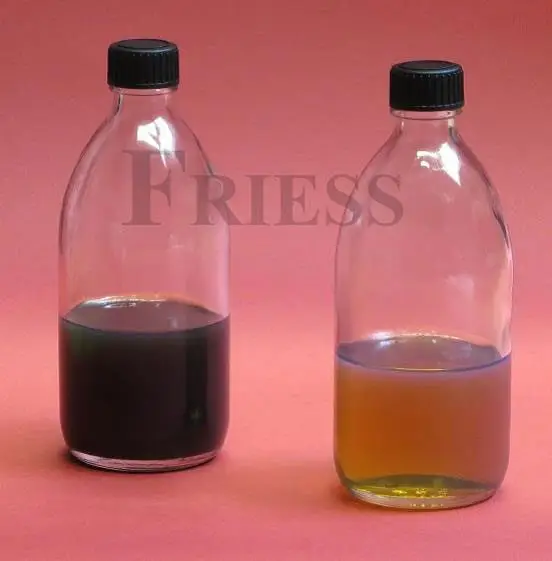
After cleaning, the oil condition had improved so significantly that it could be used again without restriction. The strong cleaning performance of the EFR system eliminated the regular oil changes previously required.
Hydraulic-oil service life increased from about two months to several years, while hydraulic-system failures fell by 70%.
- Hydraulic-oil service life extended from about two months to several years
- Hydraulic-system failures reduced by 70%
For hydraulic-system operators: FRIESS also provides hydraulic-oil purification services; repairs and spare parts are not offered.
Hydraulic oil contamination causing equipment failures and rising maintenance costs at your steel mill?
Please share your hydraulic oil grade, reservoir volume, system pressure, current cleanliness, particle and oxidation-product conditions, failure symptoms and target performance. Our China engineering team can recommend an EFR D8 electrostatic oil cleaner configuration, bypass installation and operating schedule for your conditions.