
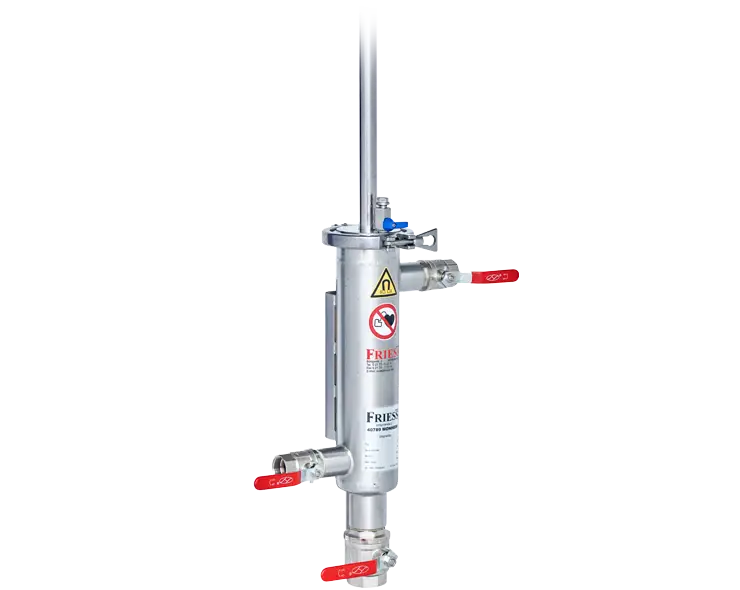
Fine magnetic filtration.
Easy routine cleaning.
Movable neodymium magnets capture ferromagnetic particles from coolants, grinding fluids and wash liquids. Choose closed or open cleaning to suit your maintenance routine.
Handles up to 100 L/min of emulsion or 50 L/min of oil. No disposable filter media are required, and 1″ BSP connections simplify integration into existing pipework.
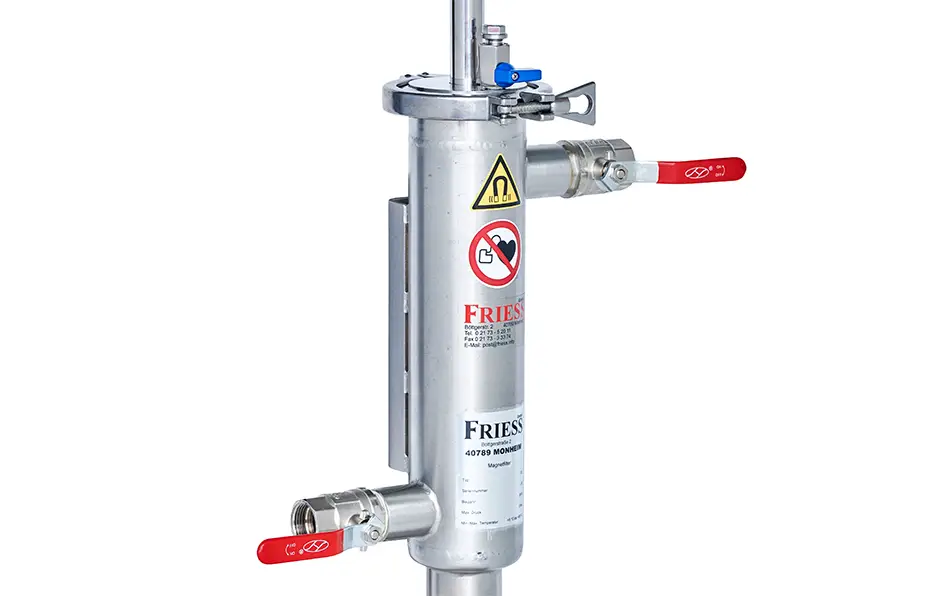
CC Magnetic Filter: Technical Specifications and Applications
CC Magnetic Filter
The FRIESS CC magnetic filter is designed for industrial applications requiring frequent maintenance, including machining centres, grinding machines, honing machines and washing equipment that generate ferromagnetic particles. A single unit handles up to 100 L/min of emulsion or 50 L/min of oil at a maximum working pressure of 5 bar and connects through a 1-inch BSP port for rapid integration into existing pipework. It can serve one machine or a network of machines without modifying existing equipment. Its consumable-free, low-maintenance design helps reduce fluid-management costs.
How Does the CC Magnetic Filter Work?
The CC housing contains magnetic filter rods with a movable array of neodymium magnets. The magnetic field attracts ferromagnetic particles suspended in the process fluid.
Special flow guidance inside the housing washes the magnetic rods slowly and evenly, allowing even very fine particles to reach and remain on the rod surface. Full flow is maintained even when the rods are heavily covered with metallic particles.
Technical Data
Emulsion
Maximum flow rate: 100 L/min
Temperature range: 5 °C to 60 °C
Particle holding capacity: 0.8 kg
Maximum working pressure: 5 bar
Connection: 1-inch BSP
Oil
Maximum flow rate: 50 L/min
Temperature range: 5 °C to 60 °C
Particle holding capacity: 0.8 kg
Maximum working pressure: 5 bar
Connection: 1-inch BSP
Advantages
- Removes particles down to 1 µm.
- Improves surface quality in grinding processes.
- Extends the service life of coolant, wash water, grinding oil and other process fluids.
- Requires no filter aids, consumables or additional energy.
- Collected metal particles can be recycled, reducing waste and disposal costs.
Typical Applications
- Grinding
- Honing
- Electrical discharge machining (EDM)
- Lapping and polishing
- Industrial washing
- Surface pretreatment
- Quenching and hardening
- Test benches
Frequently Asked Questions
Q1: What is the difference between the CC and FMF magnetic filters?
A: The CC uses a movable neodymium magnet assembly. When the magnets are withdrawn, magnetic force no longer holds the collected particles, making cleaning faster and easier. The FMF uses fixed magnetic rods and must be cleaned against the magnetic force. The CC is particularly suitable for frequent cleaning and simple operation.
Q2: How can the CC be cleaned?
A: Two methods are available. For isolated cleaning, withdraw the magnets and discharge the sludge and remaining fluid through the drain valve. For in-operation cleaning, withdraw the magnets and brush the particles from the rods. Neither method requires special tools.
Q3: Which processes are suitable?
A: Grinding, honing, EDM, lapping and polishing, washing, surface pretreatment, quenching and test benches that generate ferromagnetic particles.
Q4: Are consumables required?
A: No. The CC relies entirely on neodymium magnetism, requires no filter paper or cartridges, and consumes no additional energy.
Q5: What happens to the collected particles?
A: The collected metal can be recycled, reducing both disposal costs and waste.
In addition to reducing operating costs, FRIESS oil skimmers, electrostatic oil cleaners, magnetic filters, coolant purification systems, oil-water separators and vacuum oil purifiers provide many further benefits.
We will be pleased to explain how these solutions can improve your process.