SKT Oil-Water Separator

Continuously Separate Tramp Oil That Cannot Rise Naturally

The SKT combines coalescing separation with proven FRIESS 1U oil-skimming technology to continuously remove dispersed tramp oil from cutting fluids, washing liquids and degreasing baths—even when the oil cannot rise naturally.

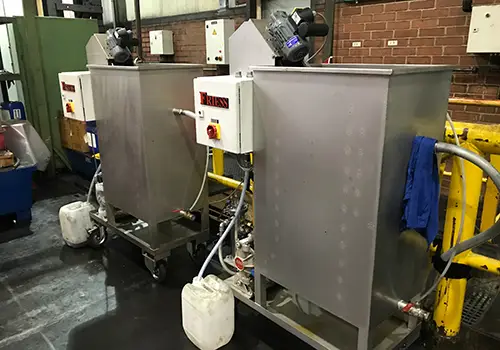
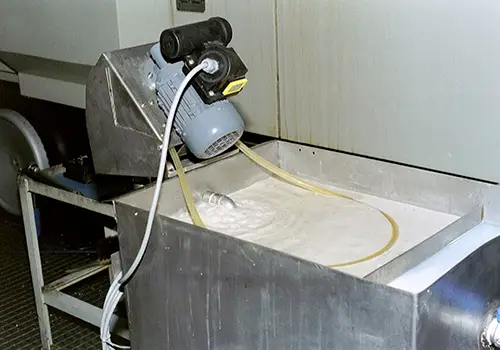
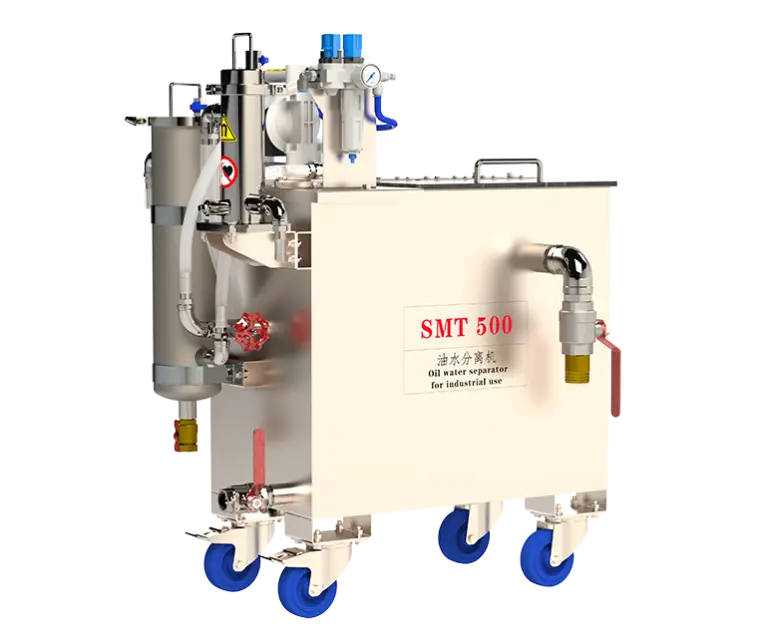
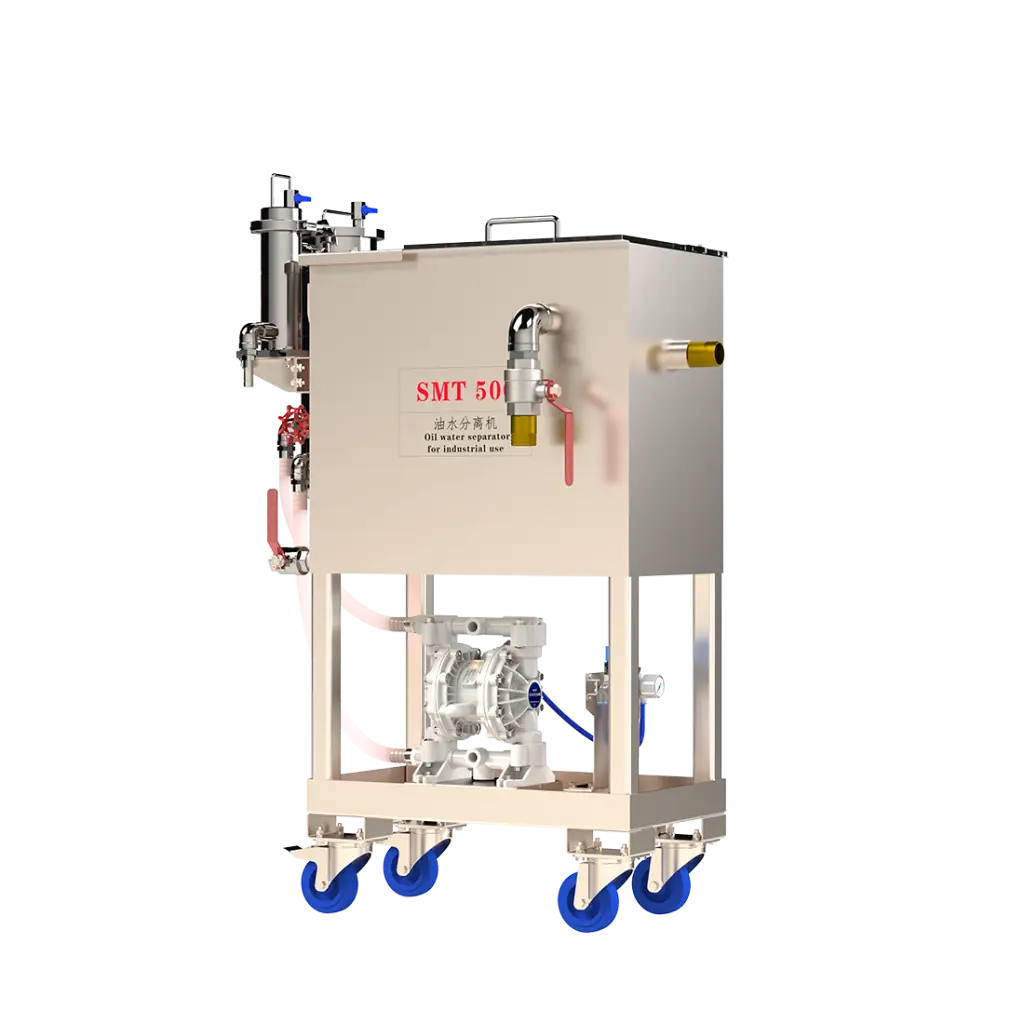
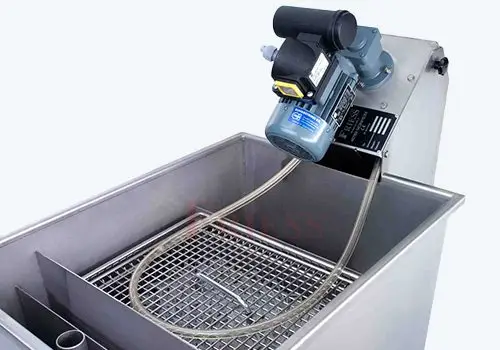
FRIESS Skimmtelligent oil-water separator for removing tramp oil from central coolant systems

Real Equipment: System Design and On-Site Installation

On-Site Operating Video

See How Coalesced Tramp Oil Is Continuously Removed by the 1U Skimmer

This video shows the SKT operating on a central coolant system. Dispersed oil droplets combine into larger droplets in the coalescing unit, rise to the surface and are continuously discharged by the integrated FRIESS 1U oil skimmer.

  • Real footage from an industrial installation
  • Observe oil coalescence, accumulation and discharge
  • Play directly on the page, pause at any time or exit full screen
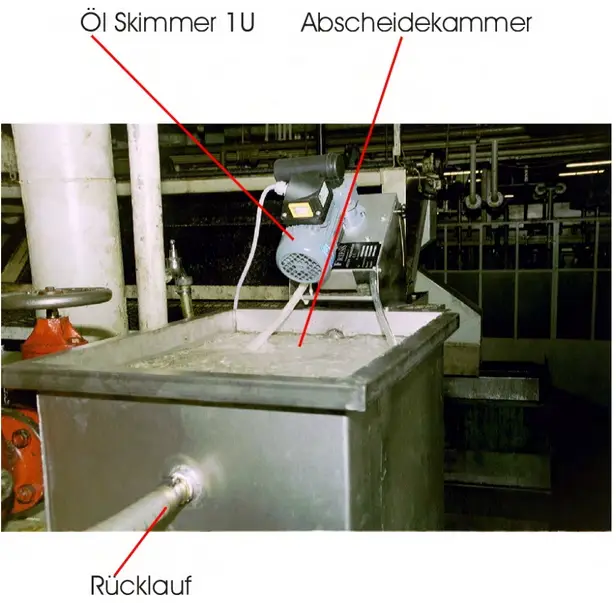
FRIESS SKT process diagram showing settling, coalescence and oil skimming

First Make the Oil Rise—Then Remove It Precisely

The SKT is more than a conventional surface skimmer. It treats the process fluid continuously in bypass: coarse particles settle in the preliminary chamber; fine tramp-oil droplets then enter the coalescing unit, combine into larger droplets with greater buoyancy and rise to the surface; finally, the integrated FRIESS 1U skimmer continuously discharges the floating oil into a collection container while the purified liquid automatically returns to the original system.

Treatment sequence: bypass extraction → coarse-particle settling → fine-droplet coalescence → oil rises → 1U skimming and discharge → purified liquid returns.

The process fluid is pumped through the SKT in a bypass stream by a diaphragm pump. In the preliminary chamber, entrained coarse contamination first settles out. The tramp oil then enters the coalescing separator, where dispersed fine droplets combine until they have sufficient buoyancy to rise to the liquid surface.

At the surface, the integrated FRIESS 1U oil skimmer continuously transfers the separated oil into a collection container, while the de-oiled liquid flows through the outlet chamber and returns to the process tank.

An optional FRIESS magnetic filter can be integrated to remove ferromagnetic particles down to approximately 1 µm.

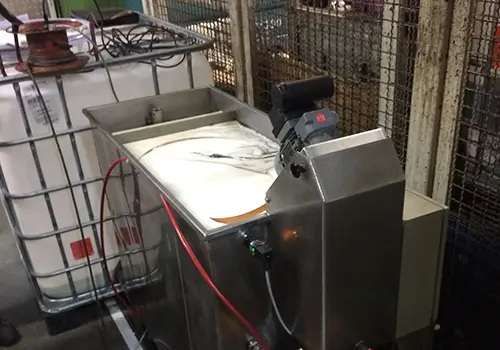
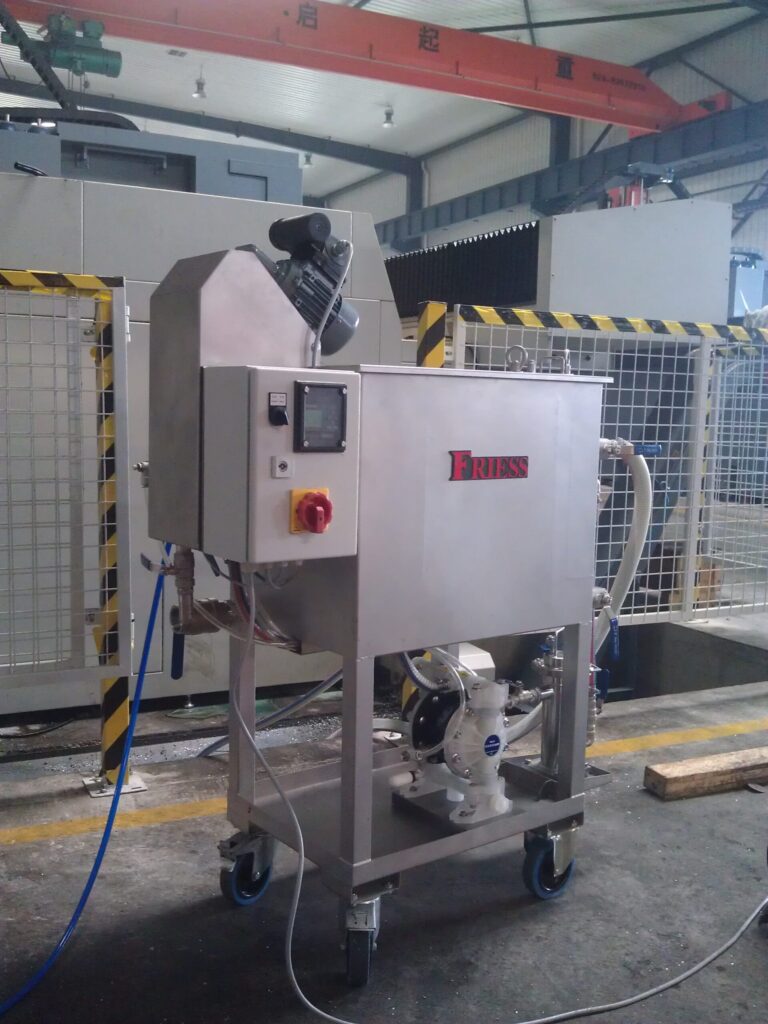
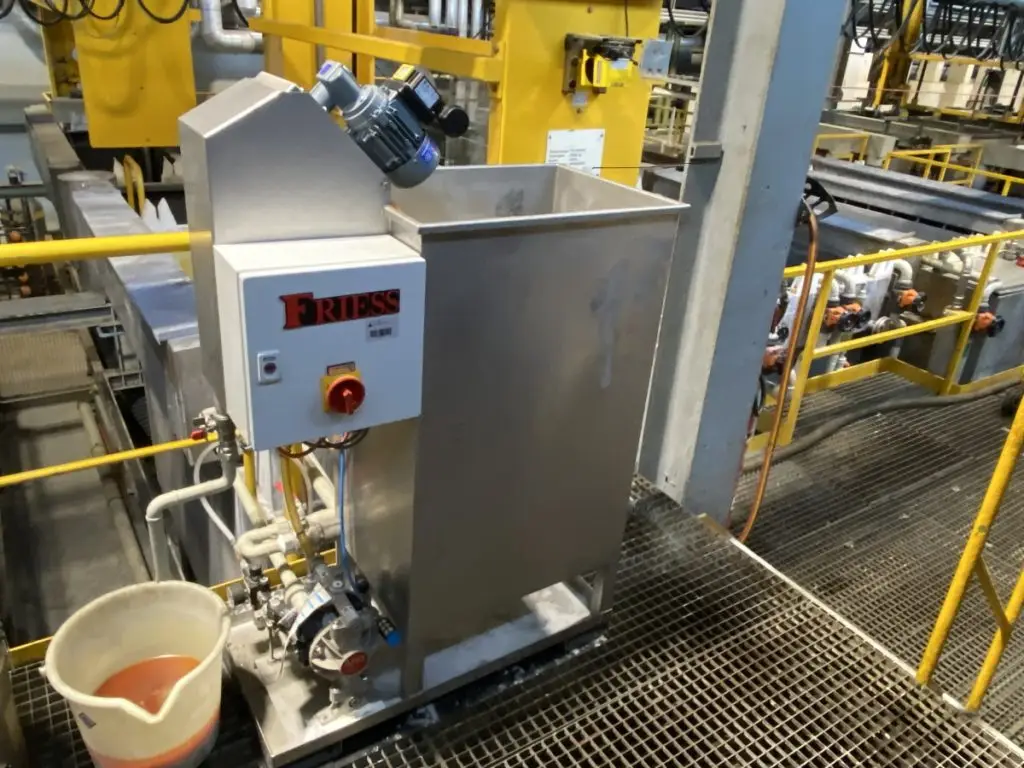
FRIESS SKT oil-water separator installed beside a large machining centre

Why Choose the SKT?

Continuous Oil Removal for Stable Process-Fluid Quality

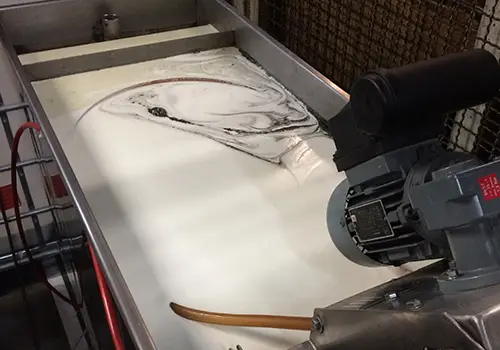
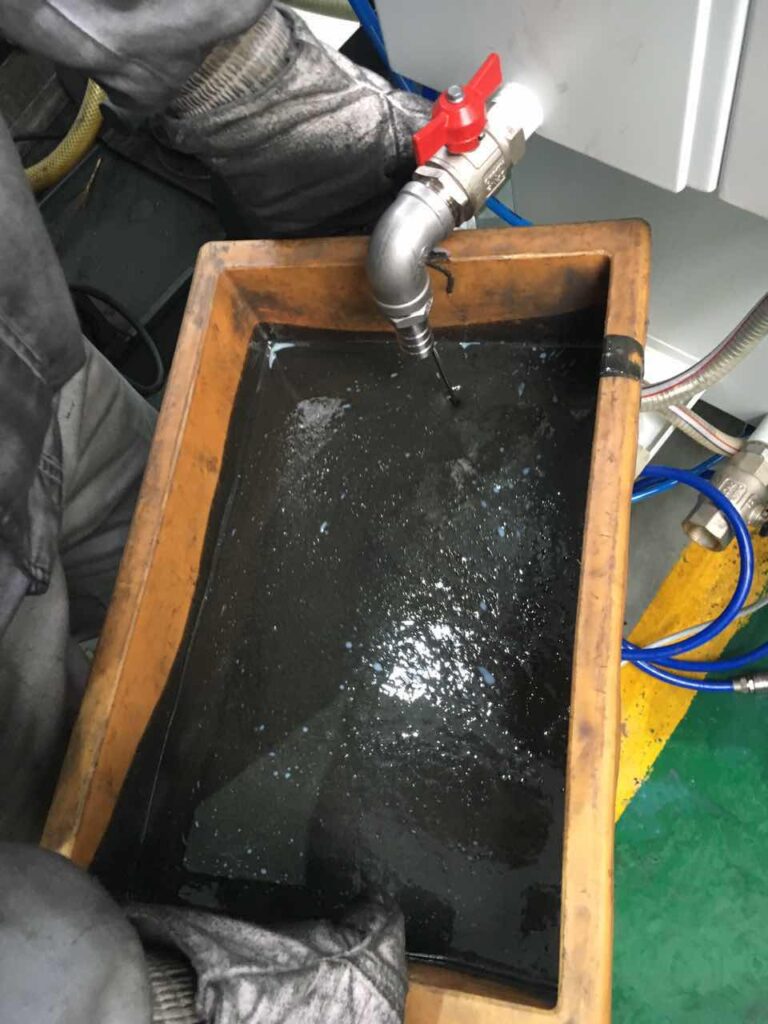
Dark oil-contaminated liquid collected from a drain valve during an SKT separation test
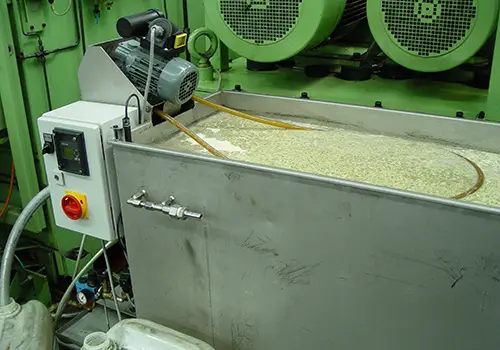
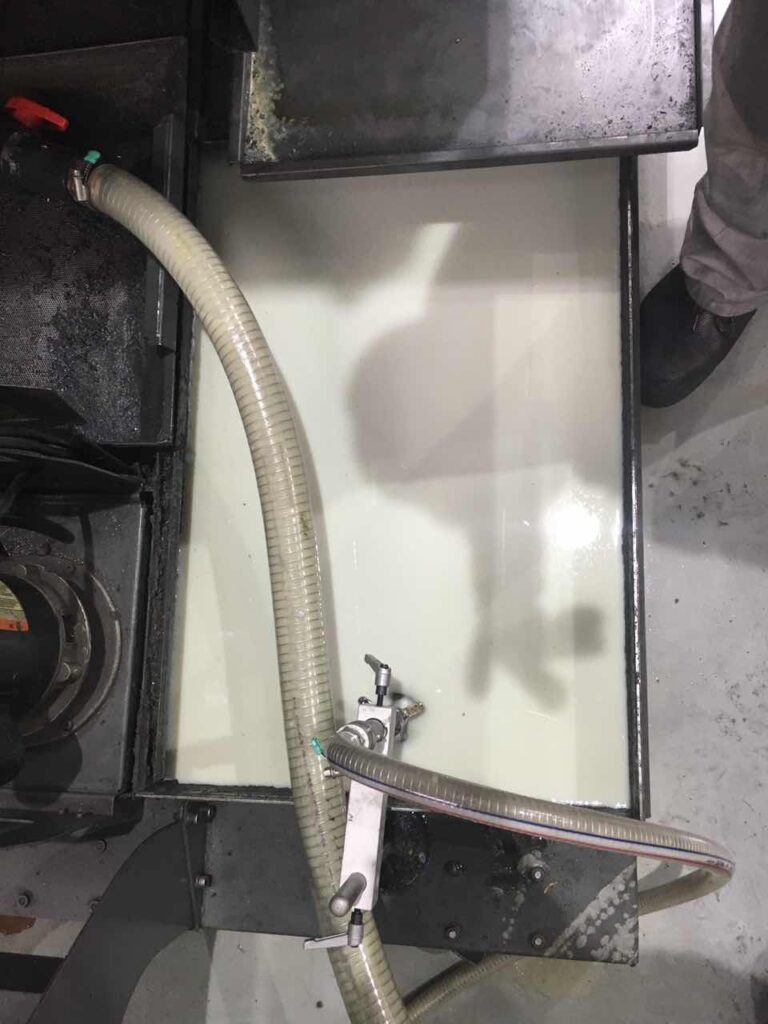
Milky process liquid and connected hoses in the return tank after SKT oil-water separation

Which Operating Conditions Need the SKT Most?

Technical Data

Real Applications: Continuous Oil Removal in Different Operating Conditions

Frequently Asked Questions

Q1: How does the SKT differ from a conventional oil skimmer?
A conventional skimmer primarily removes oil that has already reached the surface. The SKT first uses a coalescing unit to combine fine oil droplets dispersed in the process liquid, allowing them to rise. An integrated FRIESS 1U skimmer then removes the separated oil. This is particularly effective where the liquid is continuously circulating and tramp oil cannot rise naturally.

Q2: Which SKT sizes are available and how should I select one?
The SKT 10, 20 and 40 provide flow rates of 300, 600 and 1,200 L/h and are recommended for system volumes of approximately 7,500, 15,000 and 30,000 L respectively. Final selection also depends on the tramp-oil load, oil viscosity, temperature, process-fluid condition and required cleanliness.

Q3: Which liquids can the SKT treat?
It is suitable for cutting fluids, grinding fluids, industrial washing liquids, degreasing baths and quenching emulsions contaminated by hydraulic oil, slideway oil, lubricating oil or quenching oil. It can be installed as a bypass system on individual tanks or central circulation systems.

Q4: What level of improvement can the SKT deliver?
Results depend on the oil load and operating conditions. In existing applications, washing-water replacement intervals increased from one week to three weeks, while a central quenching-emulsion project achieved a payback period of less than six months. A site assessment or rental trial is recommended to confirm the expected result.

Q5: Does the SKT require consumables?
No filter paper or cartridges are required for normal operation. The SKT treats the liquid continuously in bypass while production continues. An optional FRIESS magnetic filter can be added to remove ferromagnetic particles at the same time.

Let Us Select the Right SKT for Your Actual Operating Conditions

The correct SKT configuration depends on the system volume, daily tramp-oil load and condition of the process fluid. The following information helps us identify the appropriate model and options:

  • Tank or central-system volume
  • Process-fluid type, temperature and pH
  • Type of tramp oil and approximate daily ingress
  • Whether the liquid circulates continuously or is subject to strong turbulence
  • Whether ferromagnetic particles must also be removed

We can provide an application assessment, model recommendation and rental-trial proposal.

After receiving your application data, we will recommend the appropriate SKT model and optional equipment for your treatment target.

Tell Us What You Need — Our Engineer Will Recommend a Solution

By submitting this form, you agree that Wuhan Ouyi may use the information provided to respond to your enquiry in accordance with our Privacy Policy. Please do not include sensitive personal information.