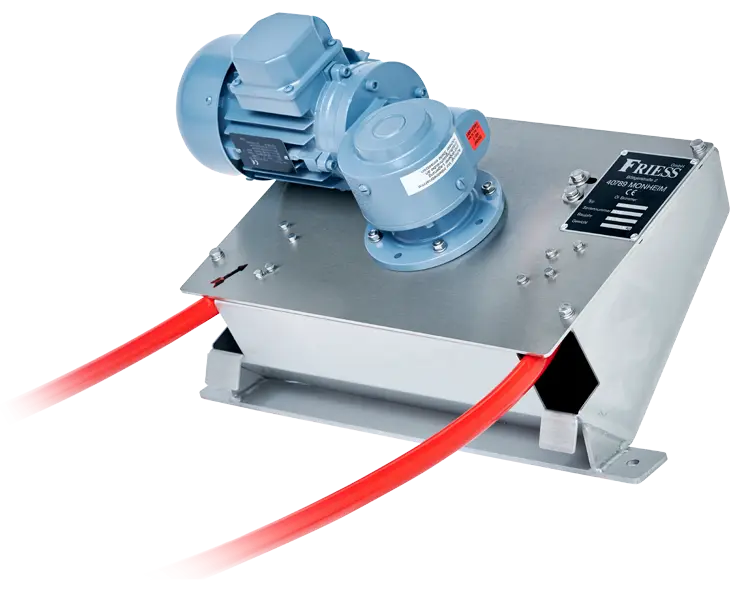
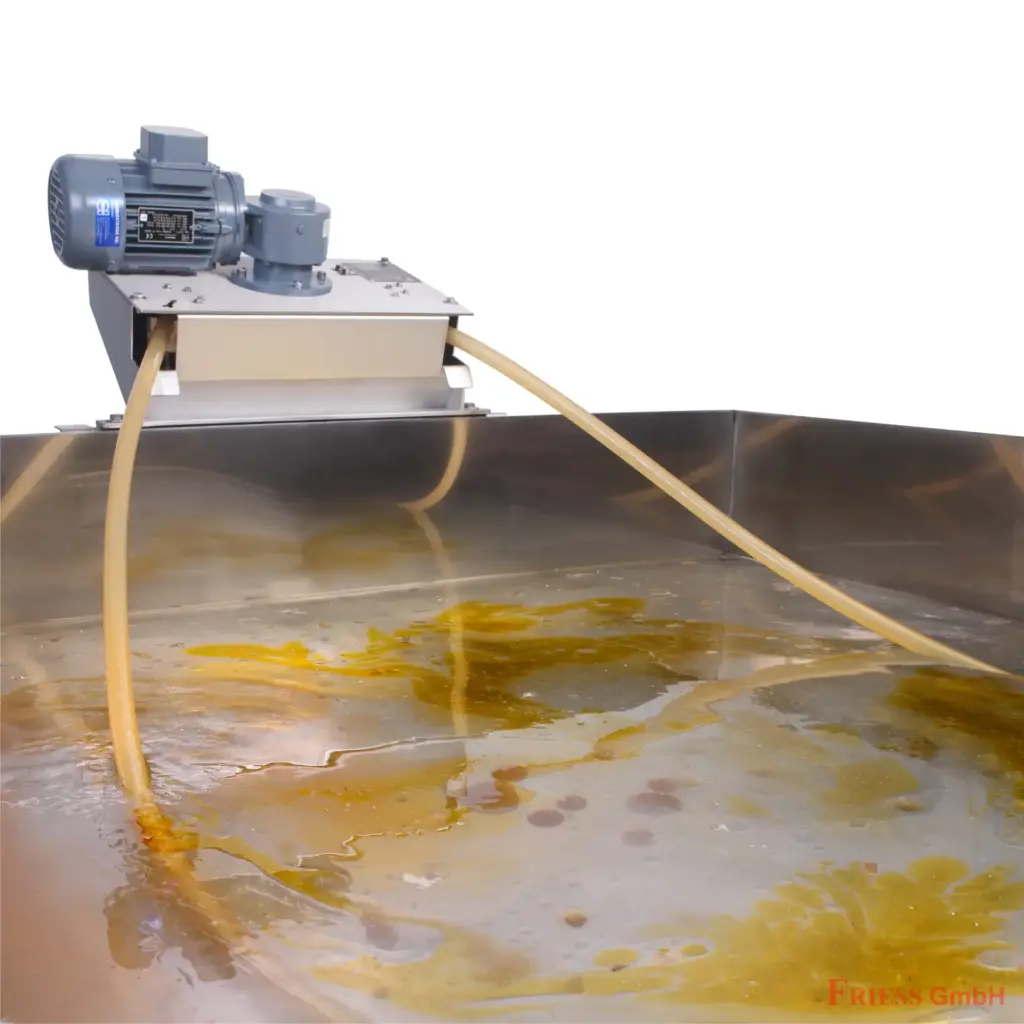
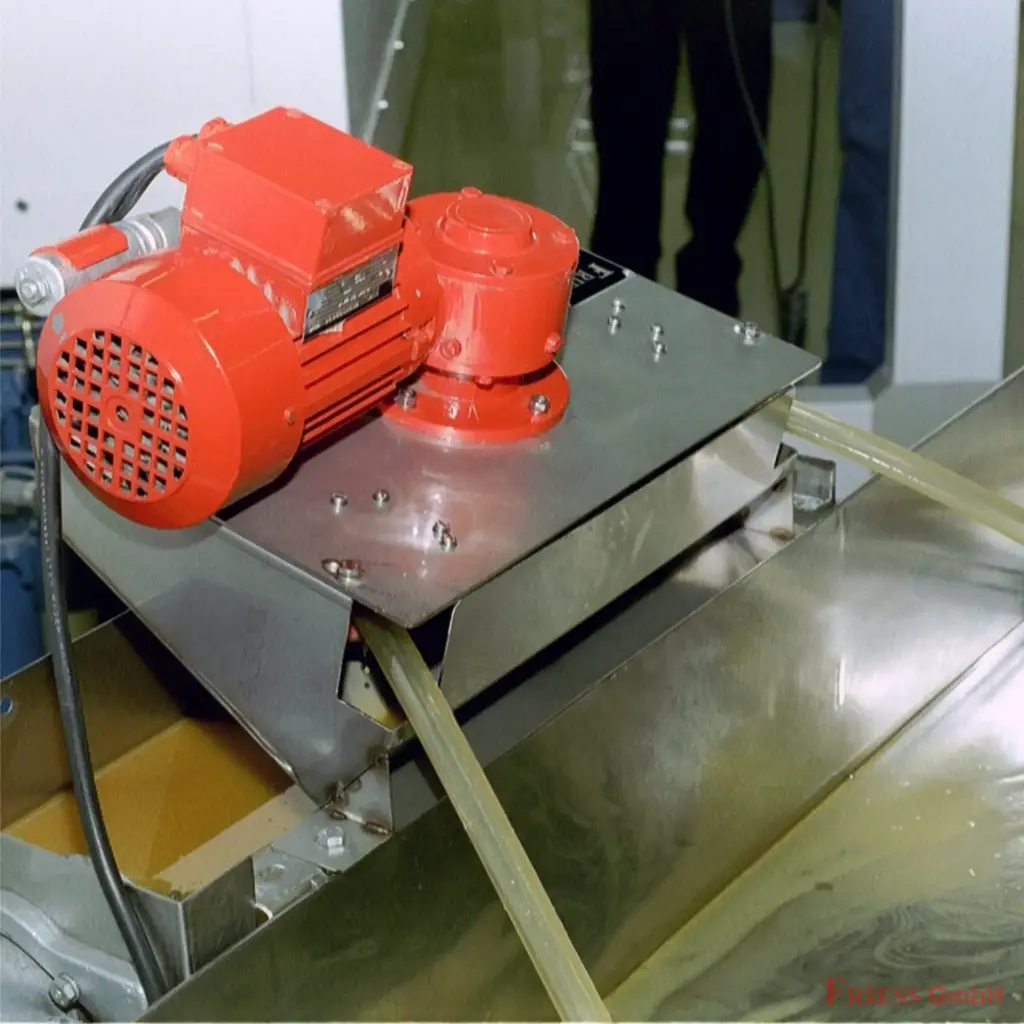
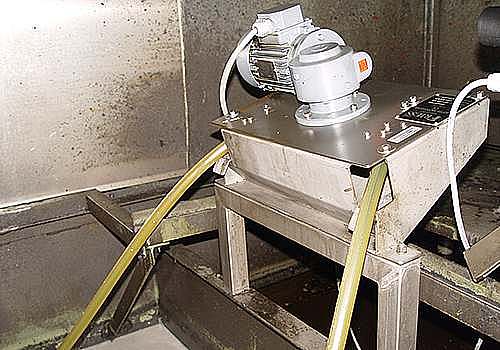
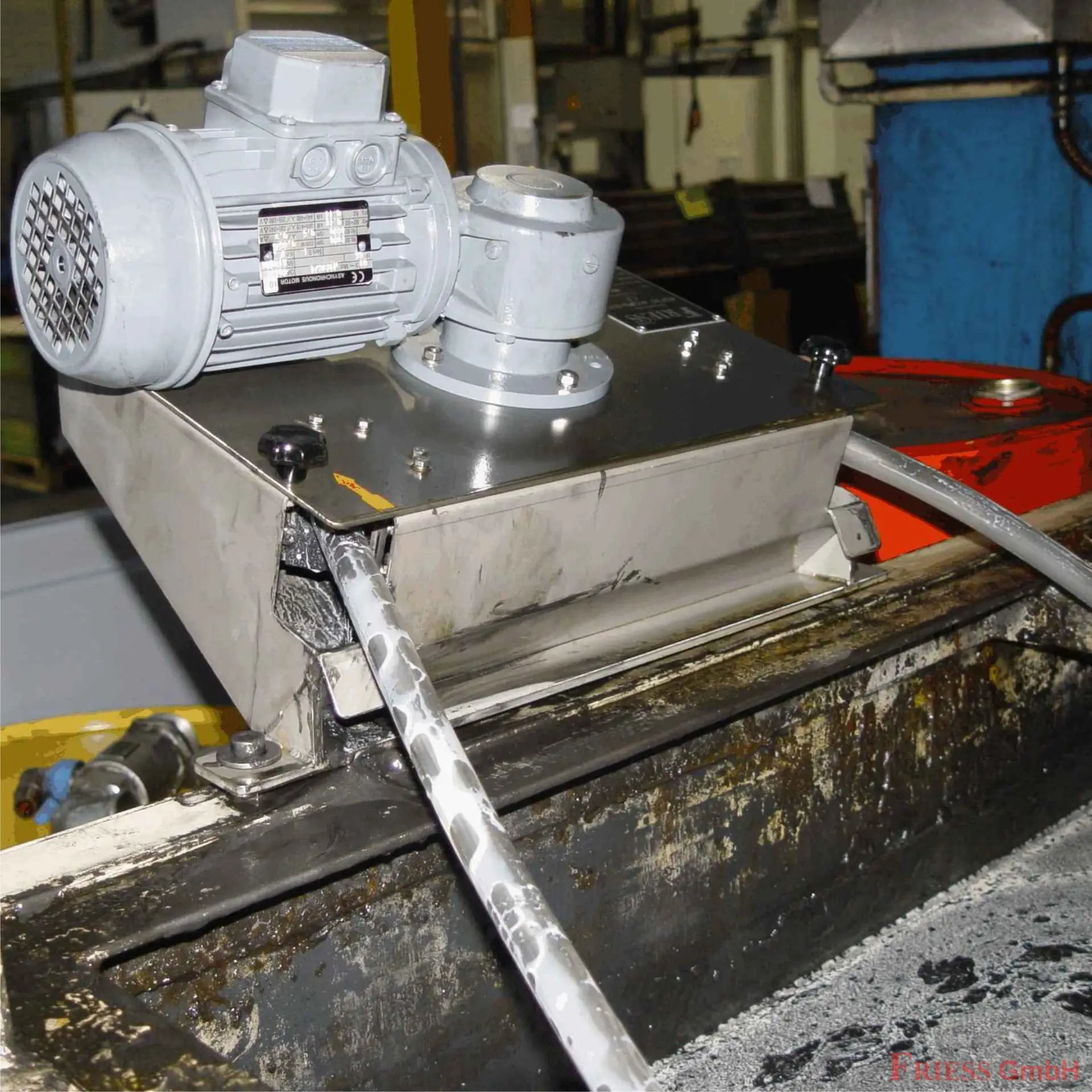
The W40 continuously recovers floating oil from open tanks, cooling-water basins and process tanks. Its floating collection tube is configured for the tank geometry and installation conditions.
Up to 230 L/h oil recovery · Minimum tank surface 800 × 800 mm
Mounting height up to 600 mm above the liquid; tube routing requires assessment of obstructions and liquid-level changes.
The continuously moving collection tube floats on the liquid, picks up surface oil and carries it back to the unit. Scrapers remove the oil into the collection tray. For long tanks or basins with obstructions, the tube route is planned around oil distribution, surface flow and mounting position to assess whether floating oil can reach the collection area.
Why Choose the W40
01
Built for Open Tanks
Continuously collects floating oil from open tanks and basins with minimum tank surface dimensions of 800 × 800 mm.
02
Tube Routing for Your Site
Collection tubing is configured around tank geometry, obstructions and oil distribution to suit the installation.
03
Continuous Surface Oil Recovery
A continuously circulating tube recovers up to 230 L/h. Actual capacity depends on oil properties and surface conditions.
04
Wear-Resistant Components
Stainless steel construction and ceramic wear parts suit industrial service, supported by regular inspection and cleaning.
W40 Technical Specifications
Drive power
0.12 kW
Oil recovery
up to 230 L/h
Operating temperature
−20 °C to +95 °C
Dimensions incl. tray
480 × 250 × 323 mm (W × L × H)
Minimum tank surface
800 × 800 mm
Mounting height above liquid
up to 600 mm
Collection-tube configuration
Configured for the tank and installation
Weight
14 kg
Actual recovery depends on oil viscosity, oil-layer thickness and surface conditions. The 600 mm limit refers to mounting height above the liquid; liquid-level variation requires a separate assessment.
Applications & Configuration
For surface oil recovery from cooling-water basins, process tanks and wastewater treatment tanks.
For open tank surfaces from 800 × 800 mm. Selection must consider coverage, mounting height and oil discharge together. Stable emulsions require a different treatment process.
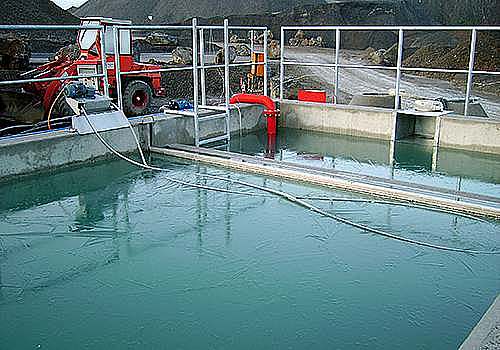
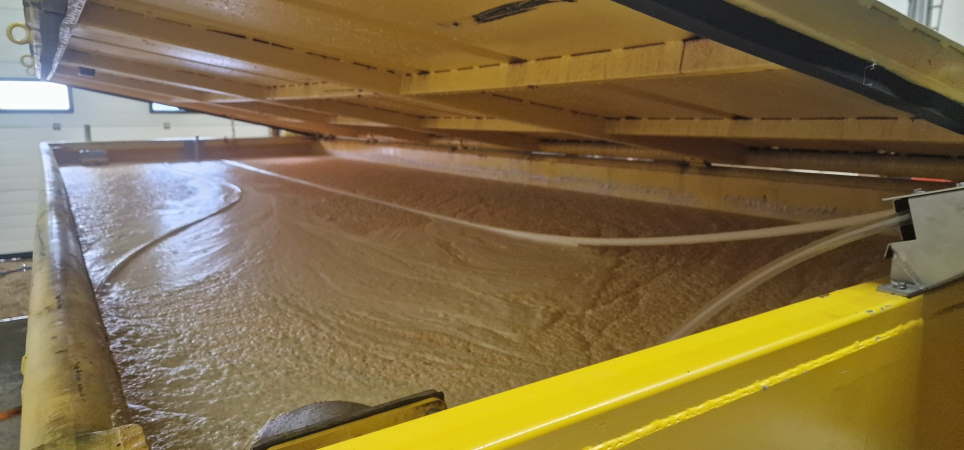
A FRIESS W40 hose oil skimmer removes a thick floating fat layer from process wastewater at the Plukon Food Group, reducing odour, disposal costs and treatment disruption.
A W40 skimmer collects floating oil and graphite-containing residues from automotive forging wastewater as a pretreatment step before downstream treatment.
The FRIESS W40 collects tramp oil and floating oily sludge from the coolant surface in grey cast iron machining, reducing the black contamination layer and supporting subsequent coolant maintenance.
A FRIESS W40 oil skimmer removed oil and grease from a steel mill cooling-water clarifier, protecting the downstream gravel filter for more than three years.
The W20 suits narrow tanks 500–1000 mm wide; the W40 has minimum tank surface dimensions of 800 × 800 mm. Both recover up to 230 L/h, depending on the oil and operating conditions. Selection depends on tank geometry, mounting position and collection-tube routing.
How is coverage assessed for long tanks or basins with obstructions?
Collection tubing can be configured for the tank dimensions and layout. Share a tank plan, obstruction positions, surface-flow direction and photos of oil distribution so the tube route and any guides can be assessed. Coverage depends on floating oil reaching the collection tube, not on tank length alone.
What does the maximum 600 mm mounting height mean?
The 600 mm limit is the mounting height above the liquid. It is not a pumping head or the permitted liquid-level variation. Check the mounting position and collection-tube route against both the highest and lowest operating liquid levels.
Can the W40 remove emulsified oil or sediment from the tank bottom?
The W40 recovers free oil floating on the liquid surface; it does not separate stable emulsions. Its primary function is oil skimming, and it does not replace filtration, settling or other processes for bottom sediment and suspended particles.
Can the W40 run continuously, and what maintenance is needed?
The W40 can be used for continuous surface oil recovery. Inspect the collection tube, scrapers, ceramic parts and oil discharge route according to site contamination. Remove attached debris and monitor the oil container level. Sand, chips or sticky residues call for closer inspection.
What should be prepared before installation?
Provide tank dimensions, highest and lowest liquid levels, mounting positions and photos of the floating oil, together with liquid temperature, oil viscosity and recovery requirements. Confirm the supporting structure, power supply, oil discharge route, collection container and maintenance access to define the W40 layout.
Need oil removal across a large open tank?
Share tank dimensions, liquid-level changes, mounting positions and photos of the floating oil. Together with oil properties and recovery requirements, these details help us assess the W40 tube route, surface coverage and oil discharge layout.