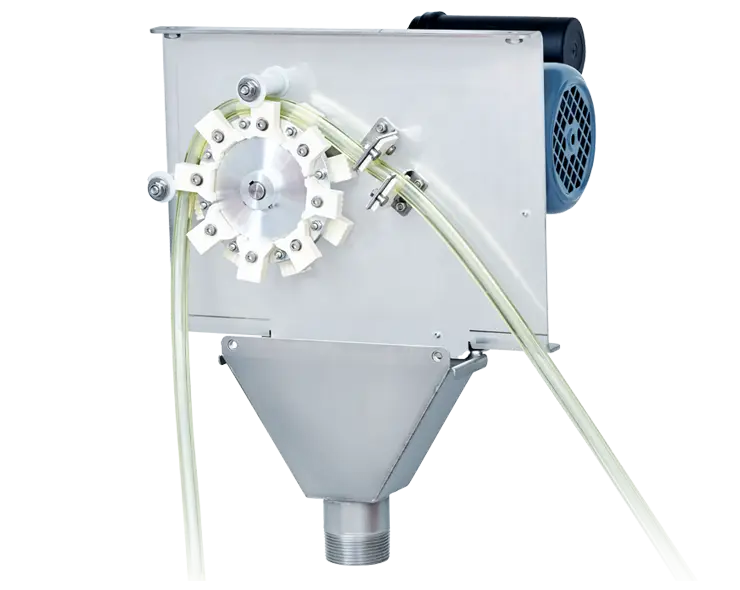
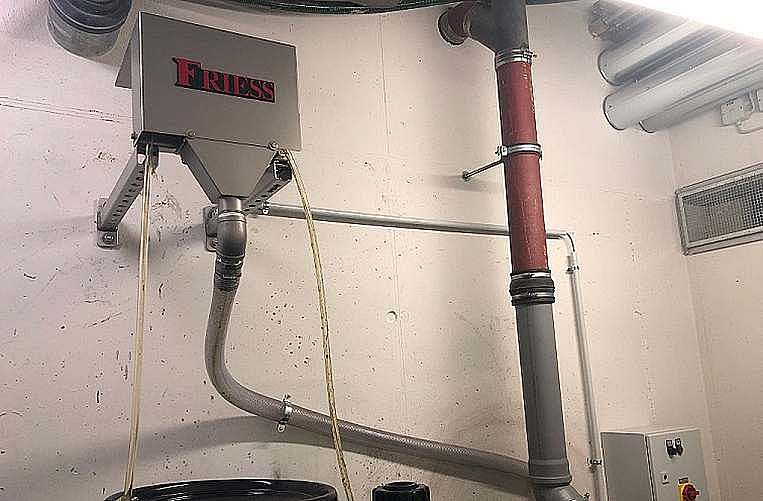
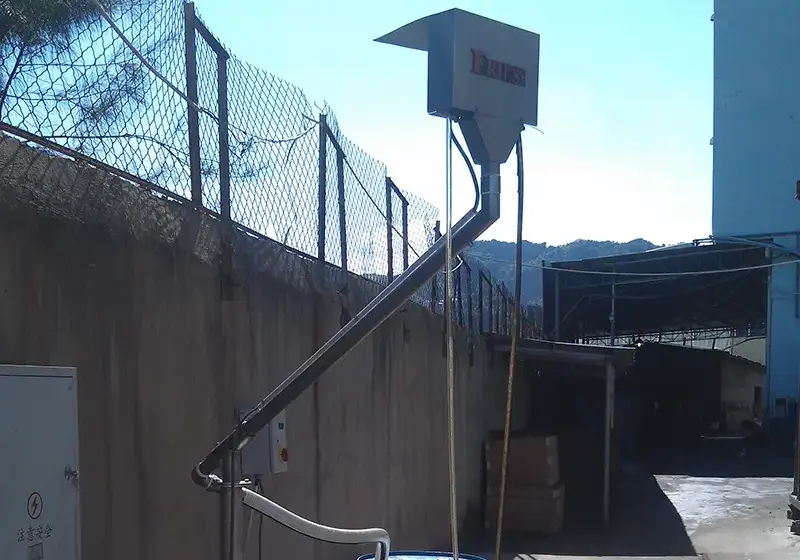
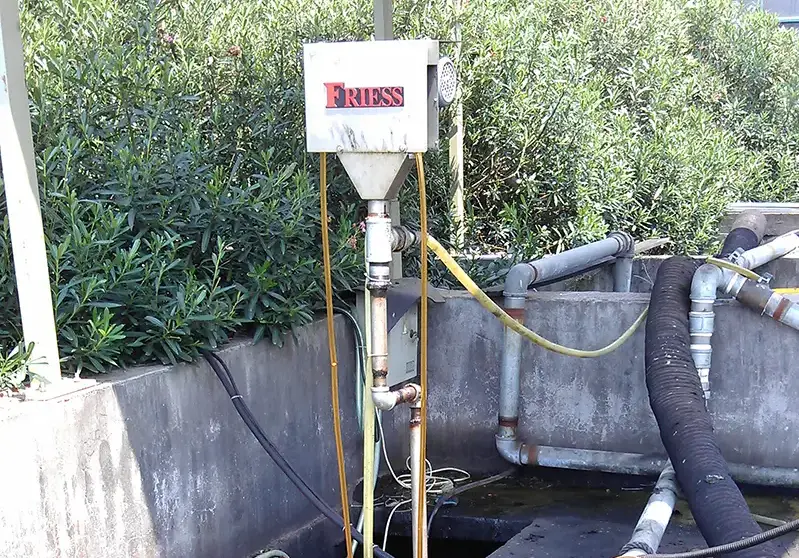
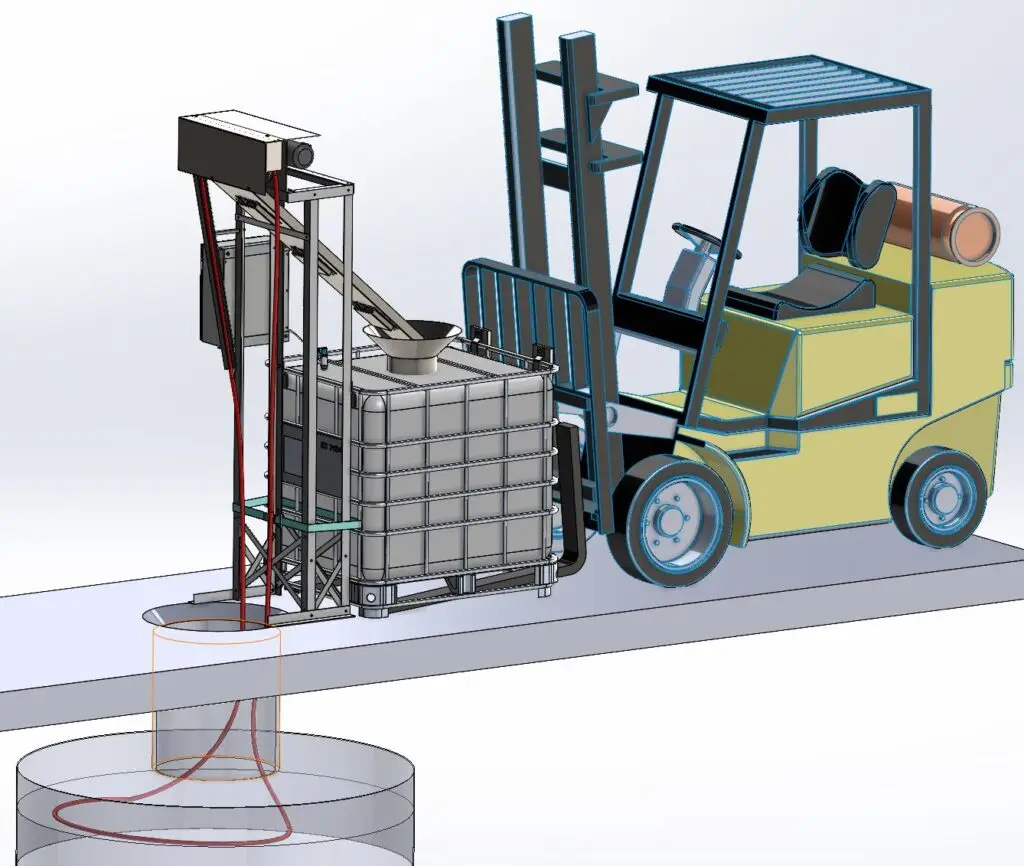
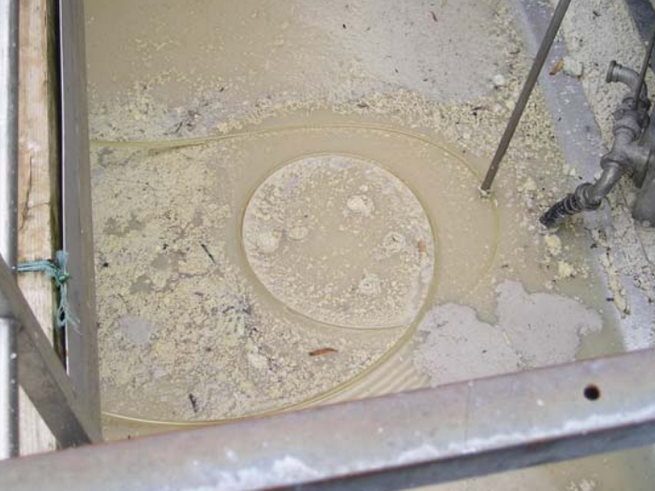
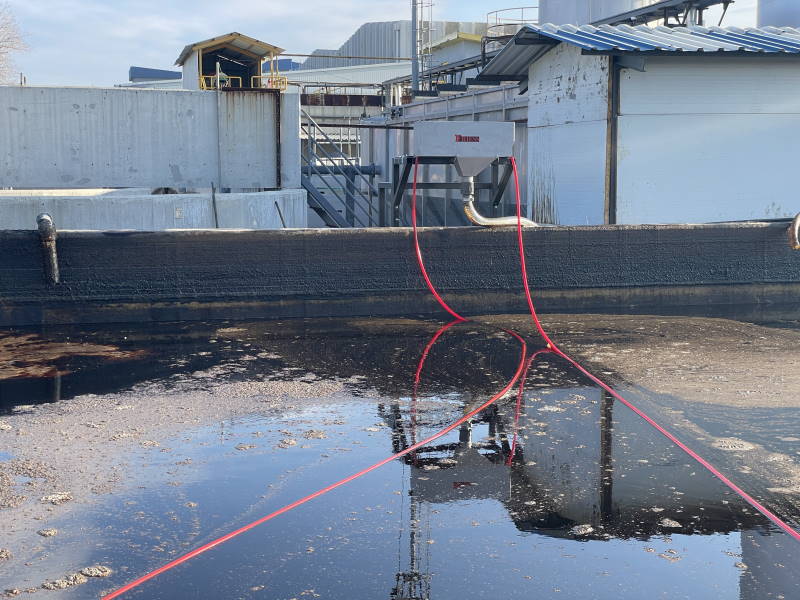
Recover floating oil from small emulsion tanks, cooling-water basins and pump pits. Guided collection tubing supports mounting above the liquid when tank-side space is limited.
2–30 L/h oil recovery · Mounting height up to 10 m 0.09 kW drive. Actual recovery and tube configuration depend on the oil and operating conditions.
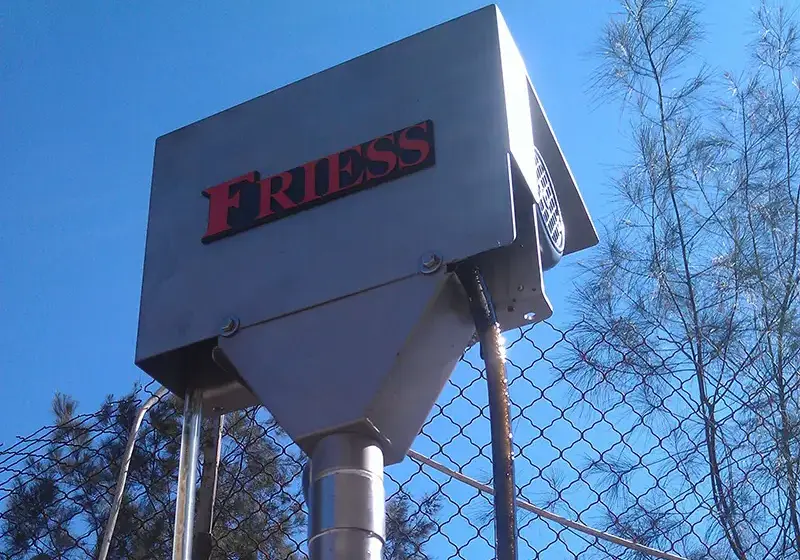
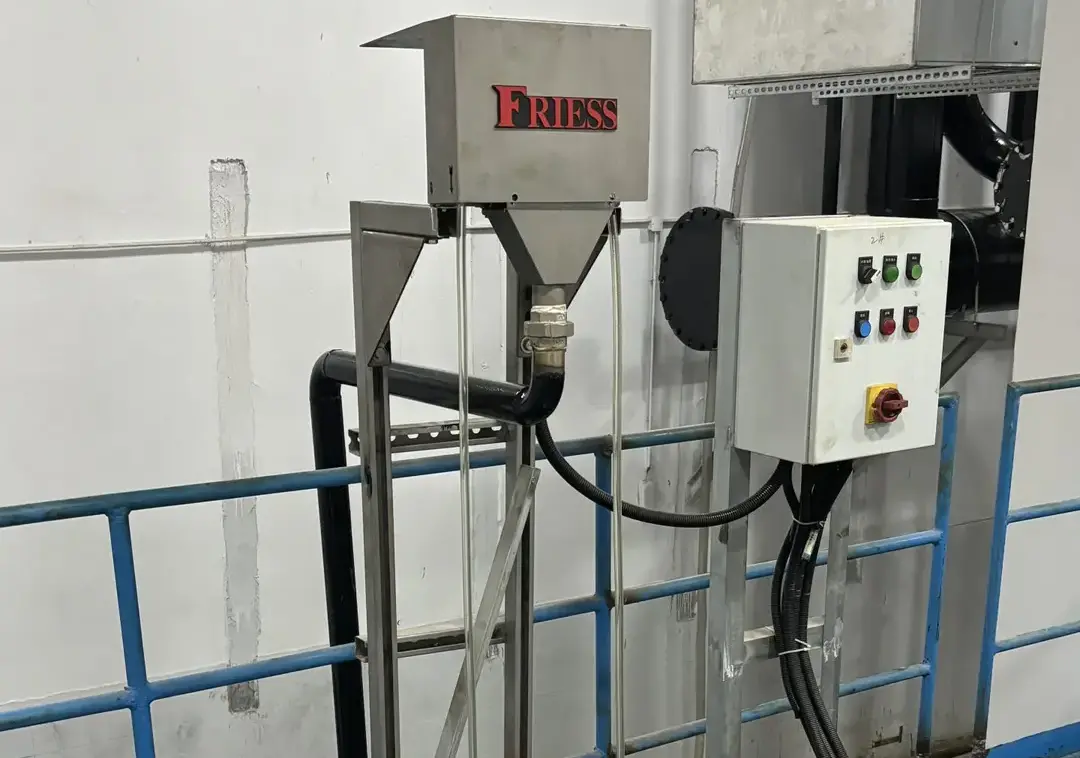
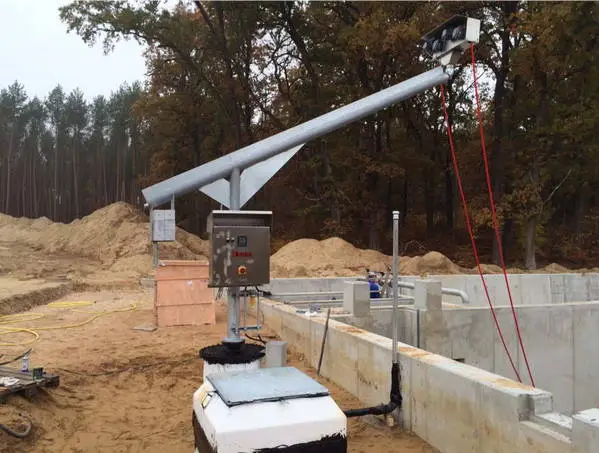
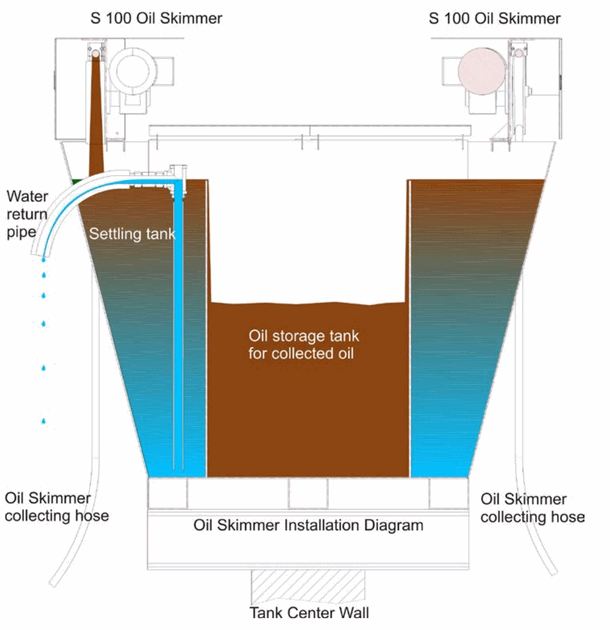
The collection tube picks up floating oil and carries it to the skimmer, where it is scraped off and directed into a collection container. Dedicated guides allow the 1S to be mounted above the liquid. The maximum 10 m refers to installation height, not discharge-pump head.
Confirm minimum and maximum liquid levels, the mounting position, tube routing and the recovered-oil container layout.
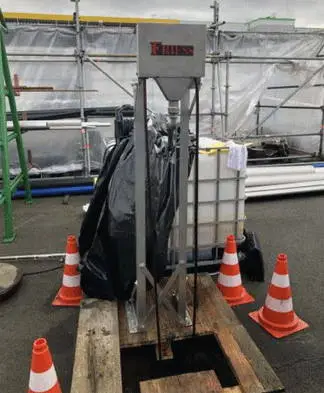
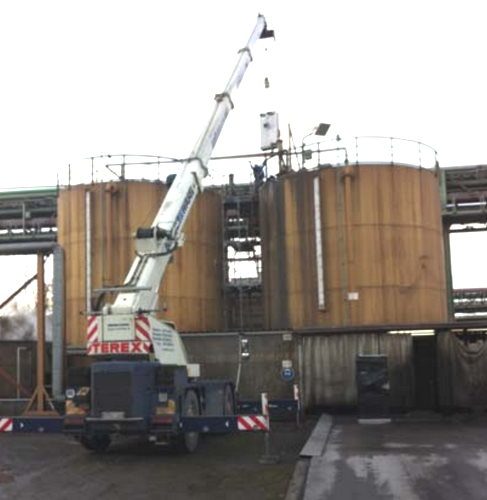
1S Product & Installation Photos
Why Choose the 1S?
01
Elevated Installation
Guided collection tubing suits pump pits, underground tanks and sites with restricted mounting positions.
02
Site-Specific Tube Routing
Match tube length and routing to the tank shape, liquid-level range and skimmer position.
03
Wear-Resistant Construction
Ceramic wear parts and stainless steel help reduce wear and maintenance. Regular inspection is still required.
04
Continuous Oil Recovery
Recover floating oil continuously to reduce manual cleaning. Actual recovery depends on operating conditions.
1S Technical Specifications
Drive power
0.09 kW
Oil recovery capacity
2–30 L/h, depending on oil and operating conditions
Operating temperature
−20 to +60 °C
Minimum tank surface
500 × 500 mm
Installation height above liquid
Up to 10 m
Floating collection-tube length
Up to 2 m
Dimensions (W × L × H, including oil tray)
308 × 300 × 372 mm
Weight
10.55 kg
Before selecting the 1S
Tank dimensions and minimum/maximum liquid levels
Mounting height, equipment position and maintenance access
Collection-tube routing and recovered-oil container layout
Typical applications Small emulsion tanks, degreasing baths, pump pits and sumps, plus floating-oil recovery in wastewater pretreatment.
Oil skimmers recover free oil; they do not separate stable emulsions.
In biodiesel wastewater treatment, the 1S continuously removes floating oils and fats from an oil separator and directs the recovered material into an IBC. In this application, fewer limit exceedances were recorded at the downstream monitoring station.
Results depend on wastewater composition, the treatment system and operating conditions. This application is not a universal discharge-quality guarantee.
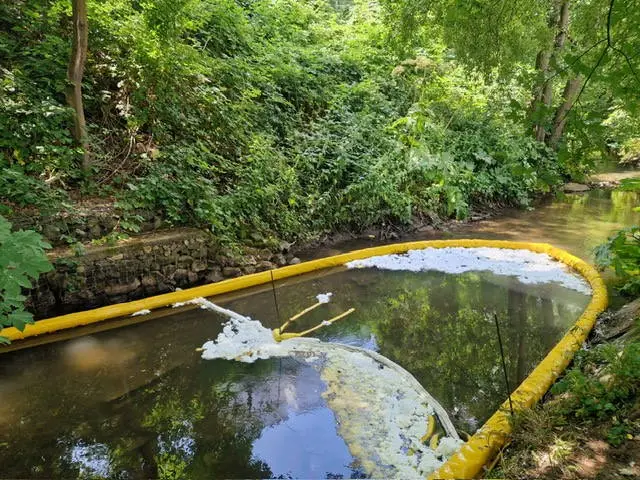
Transformer-oil spill case: a FRIESS S100 collected floating oil along a boom at a difficult-access stream site, helping contain further contamination.
A FRIESS tube oil skimmer replaced a belt unit with frequent maintenance, recovering floating oil, grease and sludge from an underground chemical-plant sump.
A FRIESS S100 oil skimmer replaced a maintenance-intensive mop skimmer in a steel mill clarifier, cutting conversion costs below one year of previous repair expenses.
A FRIESS S100 tube oil skimmer continuously removes oil, grease and sludge from a steel mill cooling-water basin, maintaining water quality through automated 24/7 operation.
A FRIESS S100 oil skimmer automatically removes floating fat from food-industry process wastewater before treatment, reducing the load on downstream separation and treatment processes.
A FRIESS S100 oil skimmer removes floating oil from steel mill cooling-water clarifiers, reducing hydrocarbon carryover and the load on downstream gravel filters.
A FRIESS 1S continuously recovers floating oils and fats from an oil separator into an IBC. In this application, fewer limit exceedances were recorded at the downstream monitoring station.
A FRIESS S100 tube oil skimmer removes floating hydrocarbons from parking lot wastewater as part of a two-stage process that achieves low HC concentrations.
FRIESS S100 oil skimmers remove floating oil from tank wash water at three German Armed Forces sites using custom swivel booms, collection tanks and remote monitoring.
Both models recover 2–30 L/h of floating oil. The main difference is mounting height above the liquid: up to 600 mm for the 1U and up to 10 m for the 1S, allowing the 1S to suit pump pits and underground tanks.
What tank size suits the 1S?
The specified minimum tank surface dimensions are 500 × 500 mm, and the floating section of the collection tube can be up to 2 m long. Confirm tank shape, minimum and maximum liquid levels, the mounting position and tube routing, together with the fluid and floating-oil conditions, before selecting the configuration.
What does the 10 m limit mean?
The maximum 10 m refers to installation height above the liquid surface. It is not the head of a discharge pump. Tube guides and the route to the recovered-oil container must be matched to the site.
How much oil can it recover?
The rated oil recovery range is 2–30 L/h. Actual recovery depends on oil viscosity and temperature, the amount of floating oil and the installation conditions.
Can it run continuously, and what maintenance is needed?
The 1S is suitable for continuous operation. Inspect the collection tube, guides, scrapers and recovered-oil container regularly. Ceramic wear parts help reduce wear but do not eliminate routine maintenance.
Floating oil in a small tank with limited mounting space?
Share tank dimensions, minimum and maximum liquid levels, the height of the proposed mounting position, fluid and floating-oil types, and site photos. We will assess 1S suitability and recommend the collection-tube length, mounting arrangement and recovered-oil collection layout.