
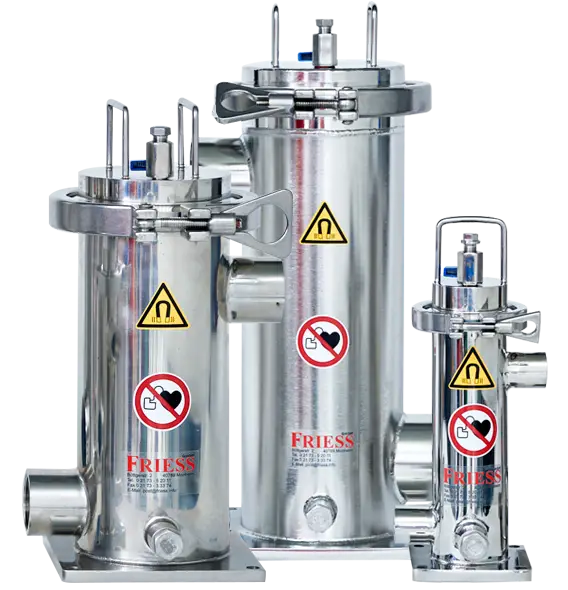
Capture magnetic particles.
Keep process fluids clean.
Captures iron chips and ferromagnetic fine particles from cutting fluids, grinding fluids, coolants and washing liquids, keeping circulation systems clean without disposable filter elements.
Continuous filtration. Fewer consumables.
Captures iron chips and ferromagnetic fine particles
No disposable filter elements to replace
Manual, semi-automatic and automatic cleaning options
Read More
How Industrial Magnetic Filters Work — Simply Explained
High-performance neodymium magnets generate a powerful field that attracts particles made of iron, steel, some stainless steels, hard metals and corundum. Special flow guidance distributes the cleaned liquid evenly around a series of magnetic rods, allowing even extremely fine particles below 1 µm to be separated magnetically.
FRIESS magnetic filters require no filter media and no operating energy. Pressure loss is minimal, and the liquid can continue to flow even when the magnetic rods are fully loaded. Apart from occasional cleaning of the rods, virtually no maintenance is required.
Advantages at a Glance:
- Filter even the finest particles down to 1 µm.
- No additional consumables are required to operate our magnetic filters.
- Achieve better surface quality and optimum grinding results with clean coolant.
- Extend the service life of machines and tools.
- Significantly extend coolant service life.
- Reduce disposal costs by reusing process fluids for longer.
- Keep energy use and fluid losses to a minimum; only semi-automatic and fully automatic magnetic filters require a small amount of drive power.
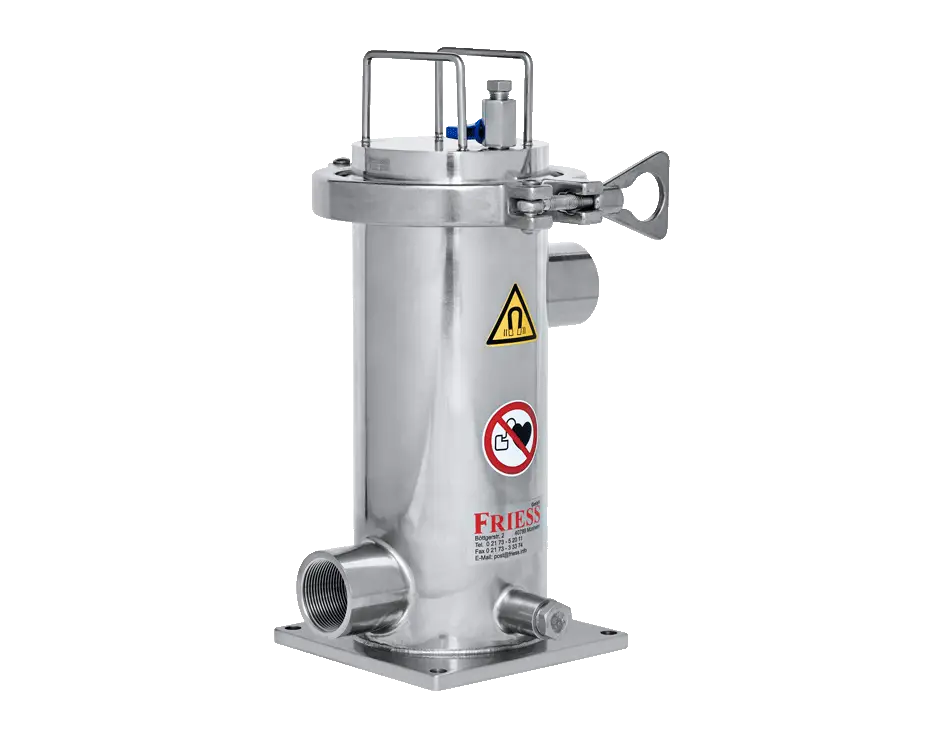
The CC can be cleaned without opening its housing, reducing disassembly and downtime. It continuously captures ferromagnetic particles from process fluids to protect pumps, valves and precision surfaces.
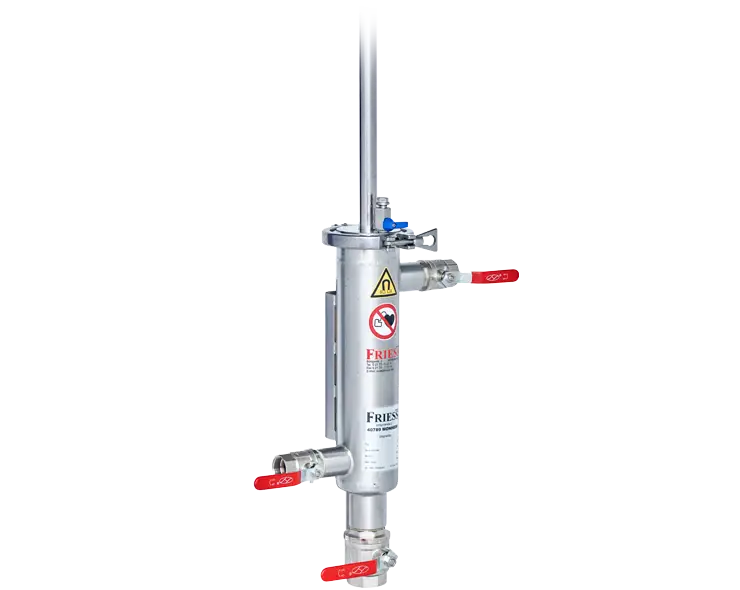
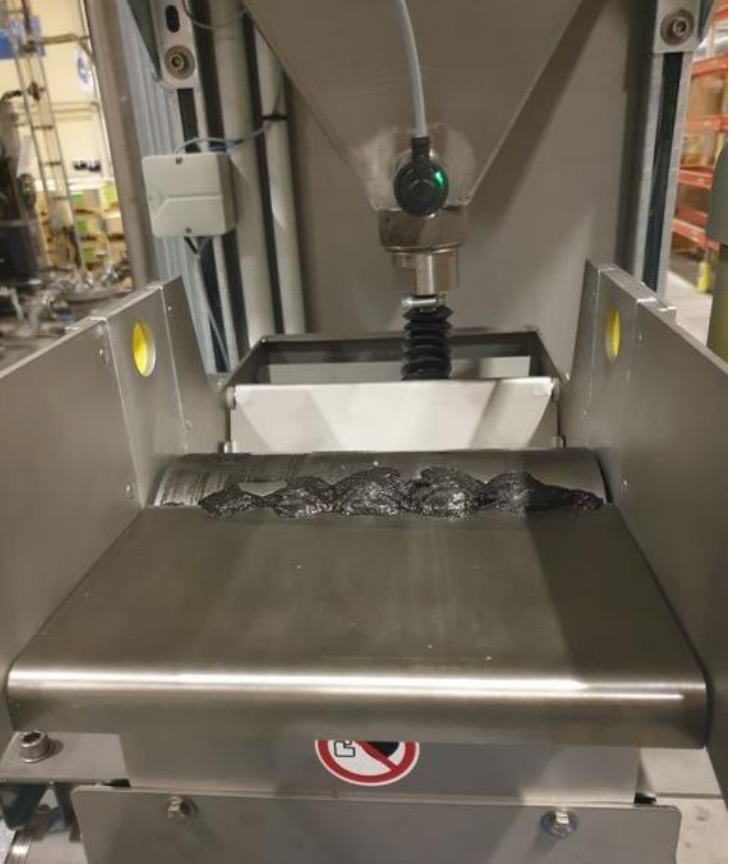
A semi-automatic cleaning mechanism quickly discharges captured ferromagnetic particles and reduces manual work, making the SMF suitable for continuous processes that require stable filtration and short maintenance stops.
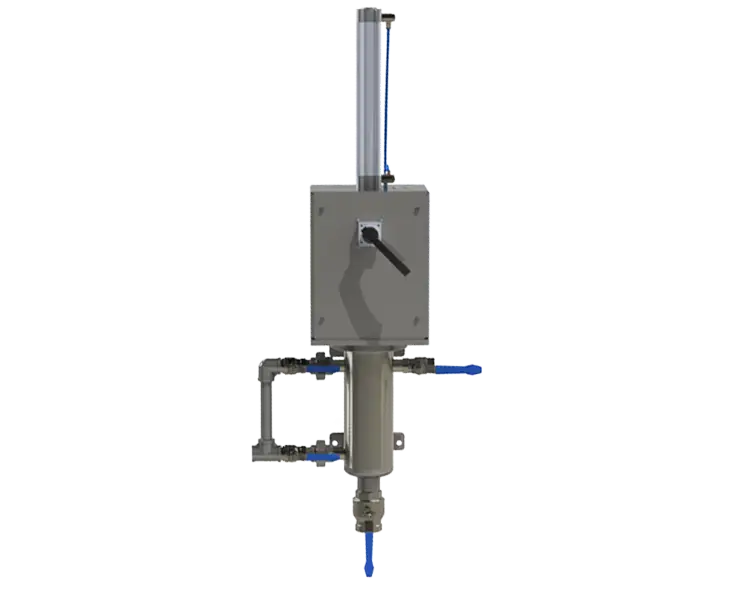
The fully automatic ASMF cleans and resets at the push of a button while continuously removing ferromagnetic particles, supporting automated production lines and circulation systems sensitive to downtime.
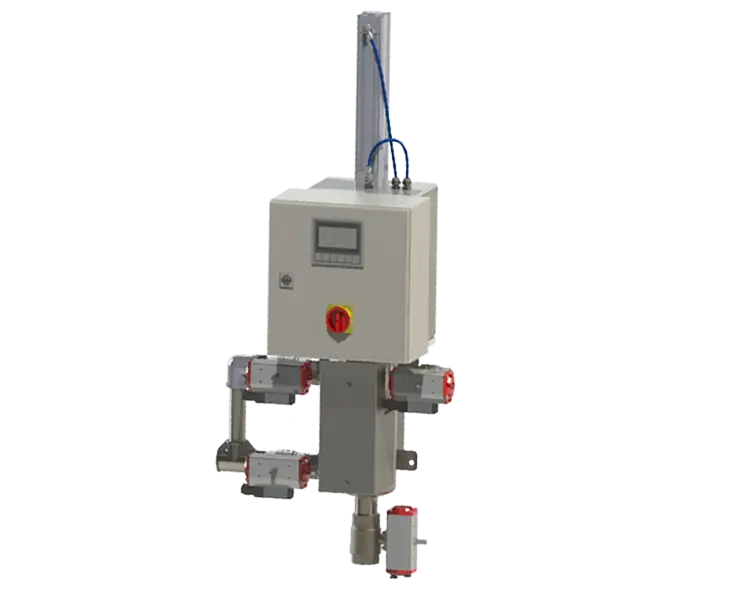
Without disposable filter media, the FMF removes iron, steel and stainless-steel particles from coolant, wash liquids and other process fluids, helping protect equipment and improve fluid cleanliness.
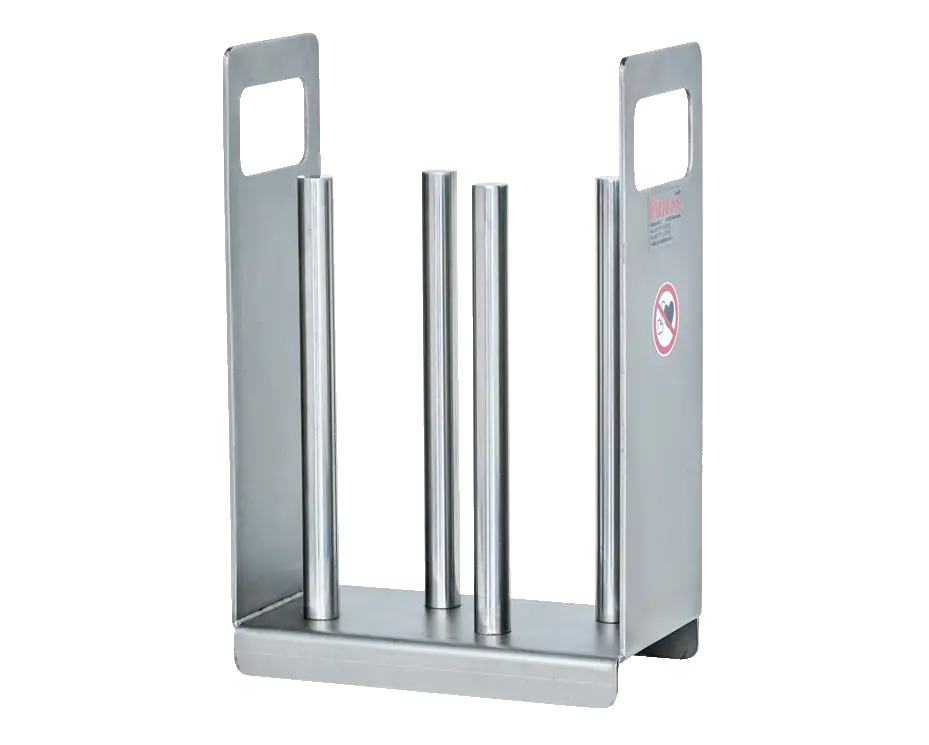
The magnetic grid directly captures ferromagnetic particles from coolant, cutting oil and grinding oil without disposable media, making it suitable for prefiltration or fine filtration in lines and tanks.
Oil Skimmer Application Examples


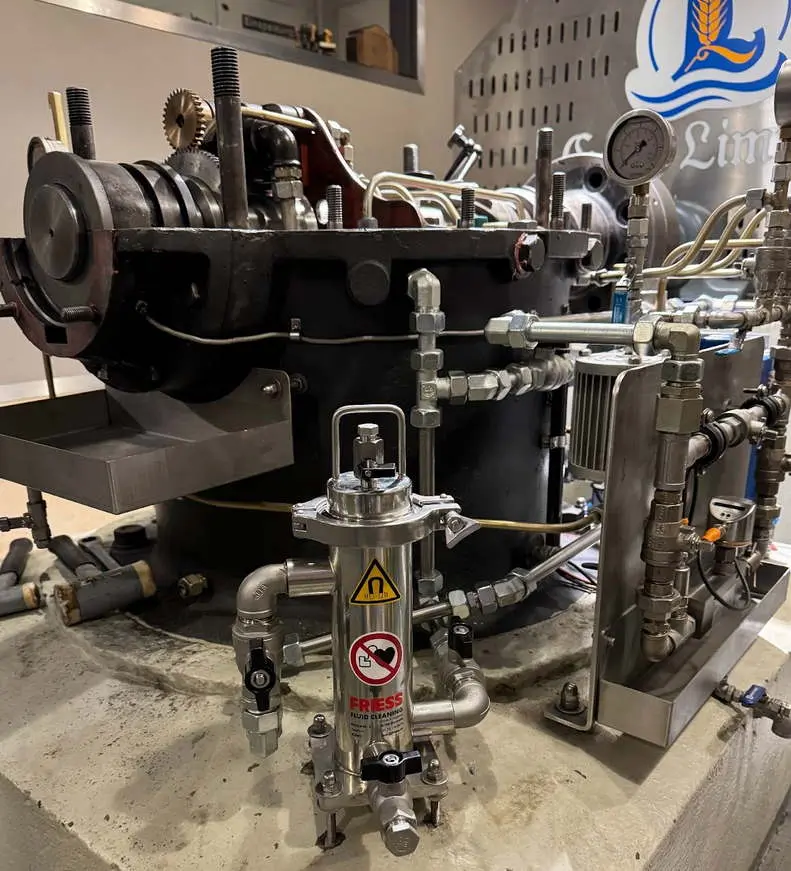

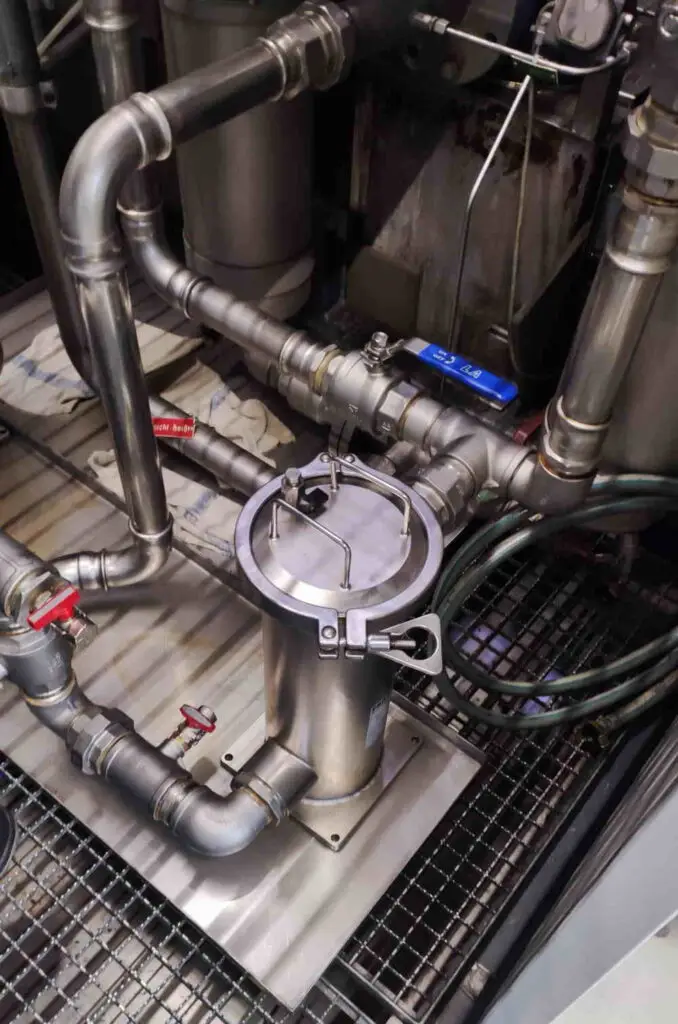


01 | Magnetic Filtration Basics: How High Field Strength Captures Fine Particles
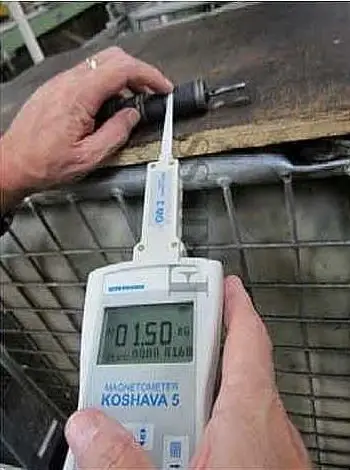
Magnetic filters use a magnetic field to capture magnetizable particles from process fluids such as cooling water, emulsions, grinding oil and wash liquids. These particles include iron, steel and ferromagnetic grades of stainless steel or hard metal. Actual separation performance depends on material magnetism, particle size, flow rate and fluid viscosity.
Permanent magnets may use AlNiCo, ceramic or rare-earth materials. Neodymium magnets provide high magnetic flux density and strong holding force, but require coatings or stainless-steel sleeves for corrosion protection. Standard neodymium magnets withstand up to about 80 °C; for long-term stability, continuous operating temperature should generally remain around 60 °C or lower.
02 | Magnetic Drums vs. Magnetic Filters: How to Choose
Magnetic Drums
Magnetic drums and magnetic filters both use magnetic fields to separate magnetizable particles, but their design and operation differ. Process fluid flows across a rotating magnetic drum, particles adhere to the surface and are carried to a scraper for continuous removal. The cleaned drum re-enters the liquid flow. Typical surface field strength is about 2,500–3,500 gauss.
Magnetic Filters
Magnetic filters contain no moving parts. Fluid enters the housing, flows across high-strength magnetic rods and returns to the system through the outlet. Magnetizable particles remain on the rods and are removed manually or automatically after a defined operating period. Typical field strength usually exceeds 10,000 gauss.
03 | FRIESS: Nearly 50 Years of Process-Fluid Filtration Experience
For nearly 50 years, FRIESS has developed solutions for cleaning process fluids. Magnetic filtration systems extend the service life of oils and process fluids and reduce wear on machines, tools and precision components, improving operating cost, resource efficiency and environmental performance.
04 | Selecting a Magnetic Filter: Parameters to Confirm
Before selection, confirm the fluid properties and viscosity, design flow rate, operating temperature, system pressure, and inlet/outlet sizes and connection types.
Correctly matching field strength, flow-channel dimensions and cleaning method extends fluid life and reduces particle wear, equipment failure and maintenance downtime.
05 | Magnetic-Filter Integration and Maintenance
Magnetic filters can be installed in full-flow systems or operated in a bypass. In bypass operation, flow and differential pressure can be matched more precisely to the filter, usually delivering more stable fine filtration. In a full-flow line, the filter mainly protects pumps and critical components; system flow, pressure loss and cleaning intervals must be checked carefully.
06 | Economic and Environmental Benefits
Reduce Operating and Capital Costs
Routine maintenance mainly consists of removing collected particles. Manual models are simple and require little beyond scheduled cleaning; semi-automatic and fully automatic systems only need periodic checks of scrapers, valves, seals and other wear parts.
Environmental Protection
A small amount of waste oil can contaminate a large volume of water. Continuously removing wear particles and extending oil life significantly reduces oil changes and waste-oil disposal; under suitable conditions, oil replacement can be reduced by up to about 90%. Magnetic filtration therefore lowers both resource consumption and environmental impact.
07 | Frequently Asked Questions: Applications, Selection and Maintenance
Where Can Magnetic Filters Be Used?
Magnetic filters suit any process that generates magnetizable particles. Typical applications include turning, milling, grinding, honing, lapping/polishing and EDM of steel and some stainless steels.
Cleaning, surface treatment, electroplating and pretreatment processes can also introduce ferromagnetic particles; timely separation reduces secondary contamination.
What Does a Magnetic Filter Do?
We can also recommend a suitable system for your operating conditions.
What Happens to the Removed Particles?
If the collected material consists of a single magnetizable metal and the residual liquid content is controlled, it may be reused internally or sent to an authorized recycler. Classification, recycling value and disposal routes should be confirmed with local recycling or waste-management providers.
Should I Use a Magnetic Filter or a Magnetic Drum?
It depends on particle load and required filtration accuracy. A magnetic drum is usually better for high loads of relatively coarse particles and can continuously remove particles of about 20 µm and larger. A high-strength magnetic filter is preferred for finer particles or ultrafine filtration. Many systems combine a magnetic drum for prefiltration with a magnetic filter for fine filtration.
Typical Magnetic-Filter Applications
Typical processes include grinding, honing, lapping/polishing, EDM, milling, steel and cast-iron machining, and industrial washing.
When Is a Magnetic Drum More Suitable?
Suitable for high particle loads and continuous solids discharge, including coarse-particle removal, prefiltration and general machining-fluid cleaning.
What Type of Magnets Do Magnetic Filters Use?
FRIESS magnetic filters generally use high-performance permanent neodymium magnets. Their high flux density creates strong attraction for fine magnetizable particles; final selection also depends on operating temperature, corrosion environment and installation design.
How Long Do Neodymium Magnets Last?
Neodymium magnets are permanent magnets and require no power to maintain their field. If protected from overheating, corrosion, heavy impact and mechanical damage, their magnetic performance remains stable for many years. Observe the permitted operating temperature and keep coatings or stainless-steel sleeves intact.
What Is the Difference Between a Magnetite Filter and an Industrial Magnetic Filter?
Magnetite filters mainly serve heating-water systems and target magnetite formed by pipe corrosion. Industrial magnetic filters handle a broader range of circulating fluids and magnetizable metal particles from machining, washing and cooling systems, including larger flows and equipment sizes.
In addition to reducing costs, FRIESS oil skimmers, electrostatic oil cleaners, magnetic filters, coolant purification systems, oil-water separators and vacuum oil purifiers offer many other advantages.
We would be pleased to explain them.